Most "best crypto exchanges 2026" lists are built for the wrong person. They talk like you're opening ten leverage positions before lunch. You're not. You want to buy BTC, ETH, maybe SOL, maybe AVAX, then move on with your life.
That's the filter for this review. Does it actually save time or just look cool? Does it keep fees under control after the first glossy signup screen? And if you need help later, are you getting an exchange or a brick wall with a chatbot in front of it?
One more thing. I didn't rank these on "number of coins" because that's lazy. I checked what matters for normal holders: order-book fees, instant-buy traps, network withdrawal costs, proof-of-reserves habits, debit card usefulness, and whether the EU MiCA story is actually clear or just marketing.
Kraken came out on top for most people. Binance still wins the cheap-fee argument in a lot of regions. Coinbase is still the easiest first exchange, even though it charges for the privilege. If that exact decision is where you're stuck, the narrower Kraken vs Coinbase comparison now adds the Binance.US fee benchmark. The rest are more situational than the rankings on page one want to admit.
That distinction matters.
If this is retirement money rather than trading capital, the exchange question changes. A normal exchange account creates taxable events as you go; a crypto IRA changes the custody, fee, and tax tradeoffs enough that it deserves a separate decision. If the specific fork is a new app-first IRA match versus the older simple-fee crypto IRA model, use the Crypto.com IRA vs iTrustCapital comparison before funding another account.
-
#1 KrakenBest overall for holders, balanced fees, cleaner trust profile, and no beginner tax like Coinbase
-
#2 CoinbaseBest crypto exchange for beginners, simplest app, easiest bank linking, most expensive mainstream default
-
#3 BinanceLowest-fee mainstream pick outside the US, deepest liquidity, but regulation and regional access stay messy
The shortcut: if you are buying to hold, optimize for trust, withdrawal clarity, and self-custody flow. If you are trading actively, optimize for liquidity and fees. Mixing those two jobs is how beginners pick the wrong exchange.
What actually matters before you pick an exchange
Trading fees are only part of the bill. Beginners get clipped in four places: the spread on instant buy, card-processing fees, withdrawal fees that change by network, and bad habits like leaving coins on the exchange forever.
That last one is the expensive mistake.
If you're buying to hold, you should already be thinking about self-custody with a hardware wallet and a seed phrase backup that can survive more than a paper card. If the decision is specifically Trezor or Ledger, our Trezor vs Ledger comparison keeps the recovery model from getting lost under device specs. If you want no-custody alternatives entirely, start with our non-custodial exchange roundup. If the goal is tax-advantaged retirement exposure, compare the providers in our crypto IRA guide before opening another exchange account. Centralized exchanges are for entry, exits, and convenience. They are not where your long-term stack belongs.
And if you're already dreaming about bots, copy-trading dashboards, and auto-DCA widgets, pause. Those are side features. The real decision is still trust, cost, and whether the exchange supports the coins you actually want to buy. If the goal is boring Bitcoin-only accumulation, use the River vs Strike vs Swan Bitcoin DCA comparison before opening another general exchange account. If you do end up automating trading later, our crypto trading bots guide goes deeper, and the narrower Pionex vs Bitsgap comparison covers the free-bot versus API-control fork.
The 7 exchanges that still deserve a spot in 2026
| Feature | Kraken | Coinbase | Binance | Bybit | OKX | Gemini | Crypto.com |
|---|---|---|---|---|---|---|---|
| Best for | Most retail holders | Absolute beginners | Lowest-fee global trading | Users who may grow into perps later | Low-fee altcoin access | US-first cautious buyers | Card users and app-first buyers |
| Base spot fee | 0.40% taker / 0.25% maker | 0.60% taker / 0.40% maker | Low, tiered, promo-heavy | 0.10% maker / 0.10% taker | 0.15% taker / 0.10% maker in EEA | 0.40% taker / 0.20% maker | Starts at 0.075% and drops with VIP tiers |
| SOL + AVAX reality | Strong retail coverage | Strong major-coin coverage | Excellent asset depth | Strong on majors and liquid alts | Very good asset coverage | Both now live, older roundups miss this | Good major-coin support |
| Proof of reserves | Regular, user-verifiable reporting | Public company reporting, not classic PoR | Published reserve pages | Published audit-backed PoR | Published reserve pages | Less prominent than Kraken or OKX | Trust signals exist, less central to the pitch |
| MiCA / EU clarity | Clearer than most rivals | Better than Binance, still entity-dependent | Mixed, check local entity first | EU entity exists, product set is narrower | Strongest official EEA story here | Licensed history, shrinking retail footprint abroad | Improving, still region-specific |
| Card angle | No card story worth choosing it for | Cleanest US consumer card option | No longer the obvious card default | Better in Europe than the US | Not the main reason to choose it | Credit card, not a core debit-card exchange play | Best all-in card ecosystem |
| Action | See pricing | See pricing | See pricing | See pricing | See pricing | See pricing | See pricing |
1. Kraken is the one I'd send most people to
Kraken wins because it doesn't force you into an ugly tradeoff. The exchange is not the cheapest. It is not the flashiest. It is not trying to turn every casual buyer into a part-time derivatives addict. That's exactly why it works.
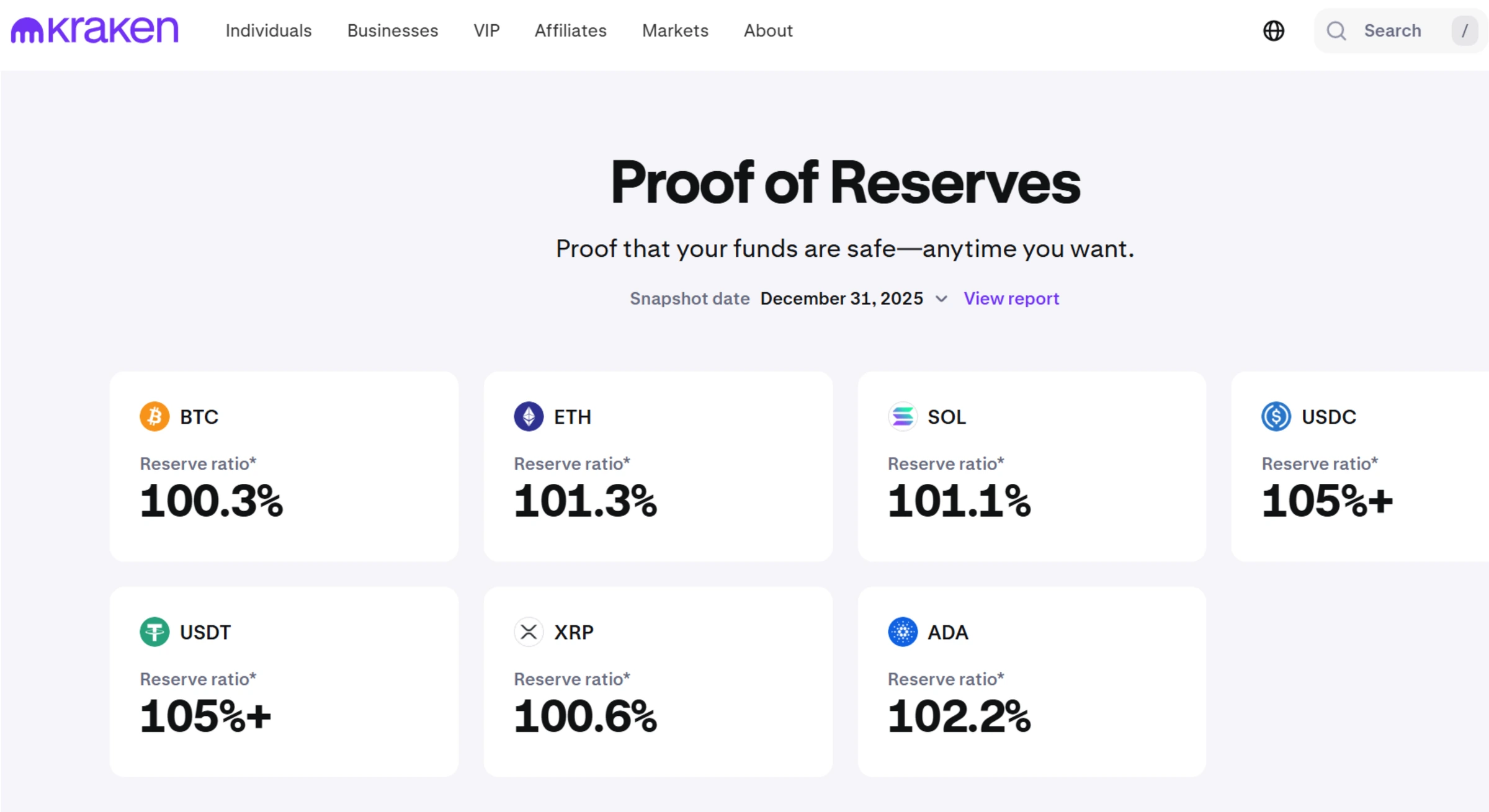
The base Kraken Pro fee schedule starts at 0.40% taker and 0.25% maker for accounts under $10,000 in 30-day volume. That's not bargain-basement, but it avoids the Coinbase beginner penalty while still feeling far more grounded than Binance or Bybit. And unlike a lot of competitors, Kraken keeps pushing proof-of-reserves as a trust feature instead of pretending the FTX era never happened.
r/Kraken threads are boring in the best possible way. Less moonboy hype, more people talking about support response times, withdrawal reliability, and not getting surprised by random policy shifts. In crypto, boring is expensive to build. Cheap to keep.
Use it if you want one exchange that still makes sense six months from now. Skip it if shaving every last basis point matters more than sleep.
Best balance of fees, trust, and simplicity — never hacked since 2011
Fee chasers who only care about the lowest headline number
- Best balance of cost, trust, and simplicity for buy-and-hold users
- Kraken Pro base fee schedule is materially better than Coinbase Advanced for small accounts
- Proof-of-reserves reporting is part of the product story, not a buried afterthought
- Less cluttered than Binance, OKX, or Crypto.com when you only want spot buying
- Strong reputation on Reddit for support and withdrawal reliability
- Not the cheapest major exchange if your only goal is headline fee minimization
- Coin menu is smaller than Binance or OKX on the long tail
- The app is functional, not fun
- If you want flashy card perks, look elsewhere
2. Coinbase is still the easiest first exchange, and that's why it gets away with murder on fees
If you are buying your first $500 of Bitcoin, Coinbase is still the smoothest ramp. Bank linking is simple. The UI is obvious. The app looks like it was built for adults instead of for people who think blinking candles are personality.
But the fee math is brutal. Coinbase Advanced starts at 0.60% taker and 0.40% maker for accounts under $10,000 in 30-day volume. That's the published order-book pricing. If you use instant buy with a card, the all-in pain can be worse, because now you're layering convenience fees and spread on top of the trade itself.
r/Coinbase is full of two recurring themes: people loving how easy the app is, and people realizing too late how much that ease cost them. Both can be true. Coinbase is the Apple tax of crypto exchanges. Smooth, familiar, expensive.
Use it if you're brand new and need the least confusing first week possible. Skip it if you're buying regularly and can spend fifteen minutes learning a better workflow.
Smoothest onboarding in crypto — bank linking just works
Cost-conscious traders — fees stack fast on instant buy
- Still the best crypto exchange for beginners who have never touched an order book
- Public-company transparency is a real trust advantage versus offshore rivals
- Strong support for major assets like BTC, ETH, SOL, AVAX, and XRP
- Coinbase Card is easier to understand than most crypto card products
- Published Advanced fees start noticeably above Kraken and well above the low-fee crowd
- Instant-buy convenience can turn a simple purchase into a fee stack
- Proof-of-reserves is not the same part of the brand story it is at Kraken
- A lot of users outgrow it quickly and resent not leaving sooner
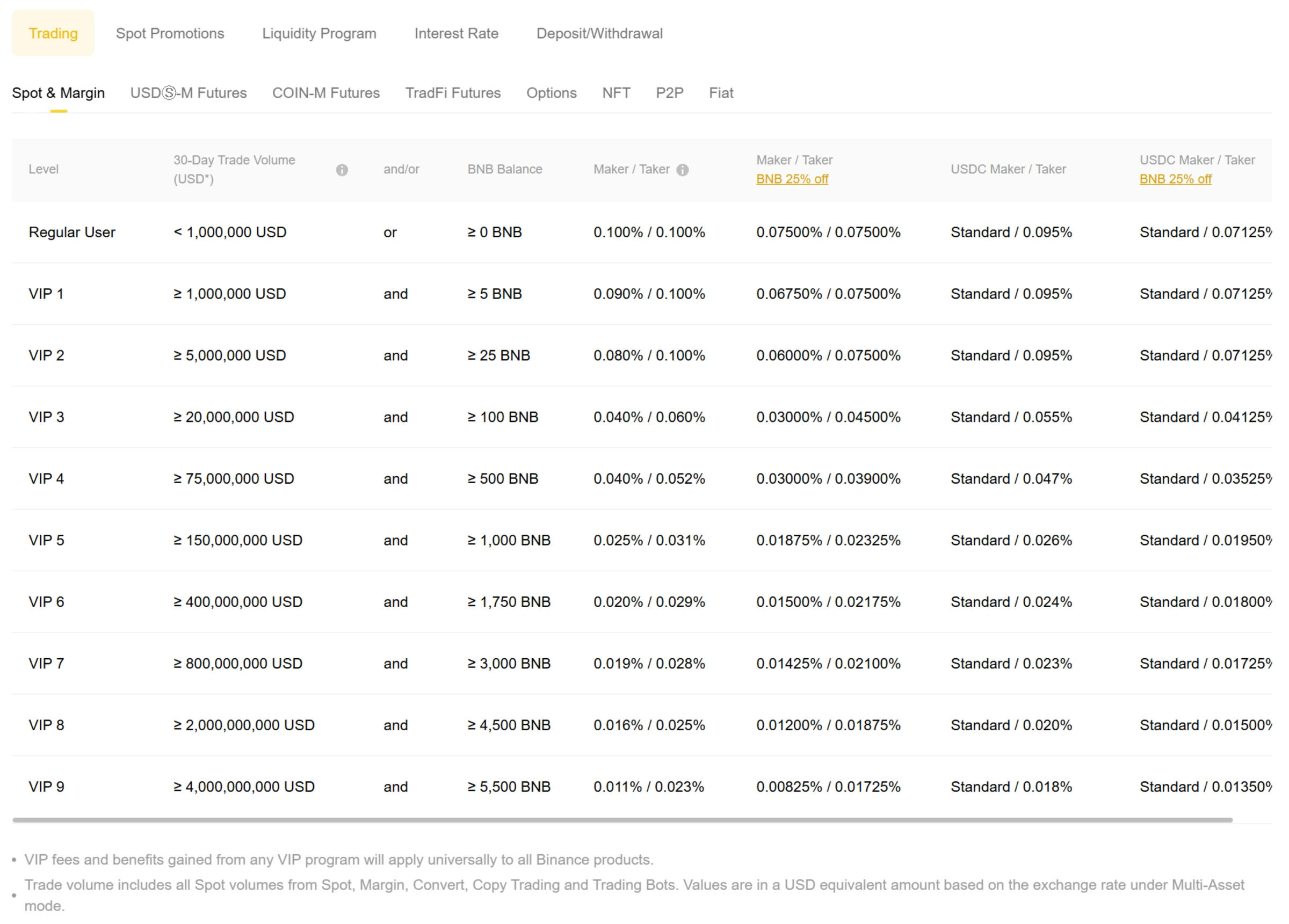
3. Binance is still the fee king in many regions, but it is not the beginner default people pretend it is
Here's the thing. Binance still matters because liquidity matters. If you want tight spreads, deep books, and a huge coin menu, Binance is usually on the shortlist immediately. That part is real.
The part lazy roundups skip is the regional mess. If you're in the US, Binance is not the answer. If you're in Europe, the answer depends on your local entity and what has changed there this quarter. If you want one simple app to buy and hold a few majors, Binance often gives you far more product than you asked for.
This is one of my hot takes for the category: Binance is over-recommended to beginners because reviewers love its fees more than they respect the reader's time. For a first exchange, complexity is a cost. People forget that because it doesn't show up as a percentage in the trade ticket.
Use it if you're outside the US, you value low fees above all else, and you can tolerate a busier product. Skip it if you're brand new and want an exchange that explains itself.
Cheapest mainstream exchange with deepest liquidity
US users and anyone who values regulatory clarity
- Still among the cheapest mainstream exchanges for spot users in many regions
- Deep liquidity and broad asset coverage are hard to beat
- Proof-of-reserves pages are visible and easy to point to
- Good choice if you buy beyond BTC and ETH but still want a big centralized venue
- US availability is the obvious problem
- EU and global regulatory story is still less clean than OKX or Kraken
- The interface pushes more products than most holders need
- Card positioning is nowhere near as straightforward as older roundup articles imply
- Support reputation is uneven across regions
4. Bybit is more useful than people think for spot buyers, but it still carries derivatives baggage
Bybit gets pigeonholed as a perps casino. That's not the full story anymore. Spot has grown, the app is good, and the exchange now has one of the more complete retail product stacks if you want to start simple and maybe graduate into more later.
The base spot fee is 0.10% maker and 0.10% taker. That's clean. What is not clean is the trust profile after the 2025 hack, even though users were made whole. I covered that in our full Bybit review, and the short version is simple: impressive recovery, still not the exchange I'd tell a nervous first-timer to trust blindly.
Reddit sentiment is split in a very human way. r/CryptoCurrency respects the recovery. r/Bybit is still full of complaints about support friction and frozen-account stories. That combination matters.
Use it if you like low fees and a good app and don't need US access. Skip it if you want the cleanest first exchange, because Bybit still feels like a trader's platform in casual clothes.
Survived a $1.5B hack — full recovery in 72 hours, no user lost funds
US users and cautious first-time buyers
- 0.10% spot maker and taker pricing is easy to understand and stays competitive
- Strong coin coverage without feeling quite as chaotic as Binance
- Published proof-of-reserves material exists and the post-hack recovery is a real trust datapoint
- Good choice if you might want bots or more advanced tools later
- Still not available in the US
- Support reputation remains a weak spot
- The derivatives-first brand baggage never fully goes away
- Not the best pick for cautious first-time buyers
5. OKX is the low-fee altcoin exchange most beginner roundups still underrate
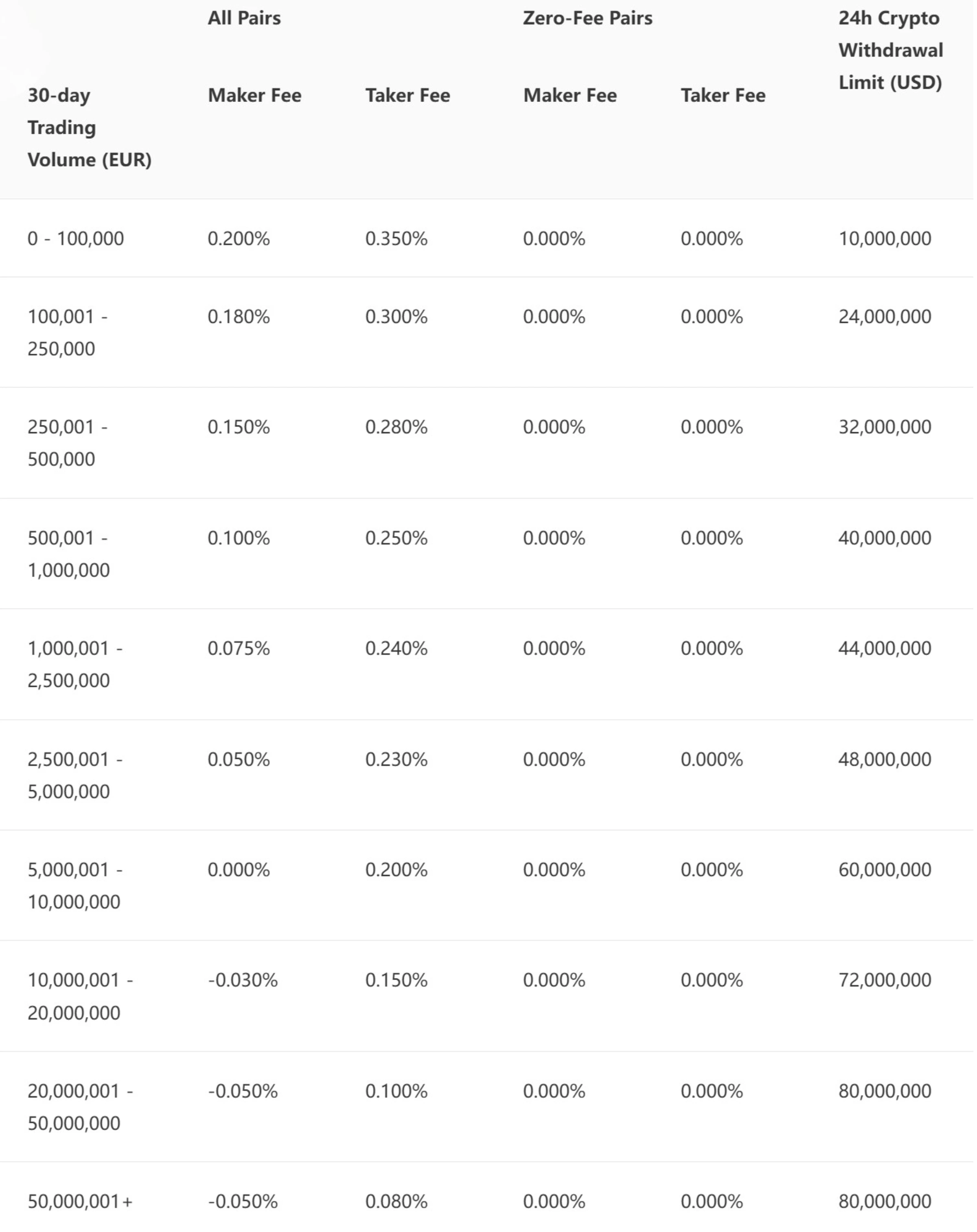
OKX is the exchange that keeps getting left out by US-centric articles, and that's a mistake. In the EEA framework, the base fee starts at 0.15% taker and 0.10% maker. That's a meaningful advantage over Coinbase and still comfortably competitive versus Kraken for people who are willing to learn one extra screen.
What surprised me more is the EU clarity. OKX Europe now leans hard into its Malta authorization language, which is more concrete than the vague "we work with regulators" copy you get elsewhere. If MiCA matters to you, and it should if you're in Europe, OKX belongs in the conversation immediately.
The catch is simple. OKX is efficient, not warm. It's the airport lounge of this category. Clean, competent, a little cold. That works for me. It won't work for everyone.
Use it if you're in Europe and want lower fees plus better altcoin depth than Kraken. Skip it if Coinbase-level onboarding is your top priority.
Strongest EU compliance messaging with deep altcoin coverage
Beginners who want Coinbase-level handholding
- EEA fee schedule starts below Coinbase and Kraken at the retail end
- Very good altcoin depth for people who buy beyond the obvious majors
- Official EU compliance messaging is clearer than most competitors
- Good fit for users who want low fees without going full Binance
- Still feels more advanced than Coinbase or Kraken
- Not the exchange I'd give to a parent on day one
- Card and lifestyle features are not the reason to choose it
- Region-specific product differences still matter
6. Gemini is the US-regulated safety blanket, but the old Earn story is dead
If a roundup is still pitching Gemini Earn as the reason to sign up, close the tab. It's stale. The Gemini pitch in 2026 is ActiveTrader, custody, and a US-regulated reputation. That's it.
ActiveTrader starts at 0.40% taker and 0.20% maker for accounts under $10,000 in 30-day volume. That's more tolerable than Coinbase on the maker side, but Gemini still doesn't win the value argument once Kraken and OKX enter the chat. The more interesting update is coin access. Gemini now has live official pages for both Solana and Avalanche, which means older articles claiming you can't buy those there are simply behind.
My second hot take: Gemini is the exchange people say they want when they are scared, not necessarily the exchange they keep using when the market gets busy. The support and compliance posture appeal to cautious US buyers. The product momentum is less compelling outside that lane, especially after retail retrenchment abroad.
Use it if you're US-based, conservative, and you value regulatory posture over fee optimization. Skip it if you want the best mix of price and product, because that is not Gemini anymore.
Strongest US regulatory posture — the conservative pick
Fee-sensitive traders — Kraken and OKX beat it on value
- Strong US-regulated reputation still means something to cautious buyers
- Gemini now supports both SOL and AVAX, despite what older roundups claim
- ActiveTrader is more serious than the default simple-buy flow
- Good option for users who care more about posture than feature sprawl
- Not cheap enough to beat Kraken or OKX on value
- The old Earn-era pitch is gone and should stay gone
- Retail relevance outside the US looks weaker now
- Proof-of-reserves and transparency story is less front-and-center than Kraken's
7. Crypto.com is the card ecosystem pick, not the pure exchange winner
Crypto.com tries to be your app, your exchange, your wallet, your card, your staking hub, and your identity. Sometimes that works. Sometimes it feels like five products taped together with a rewards program.
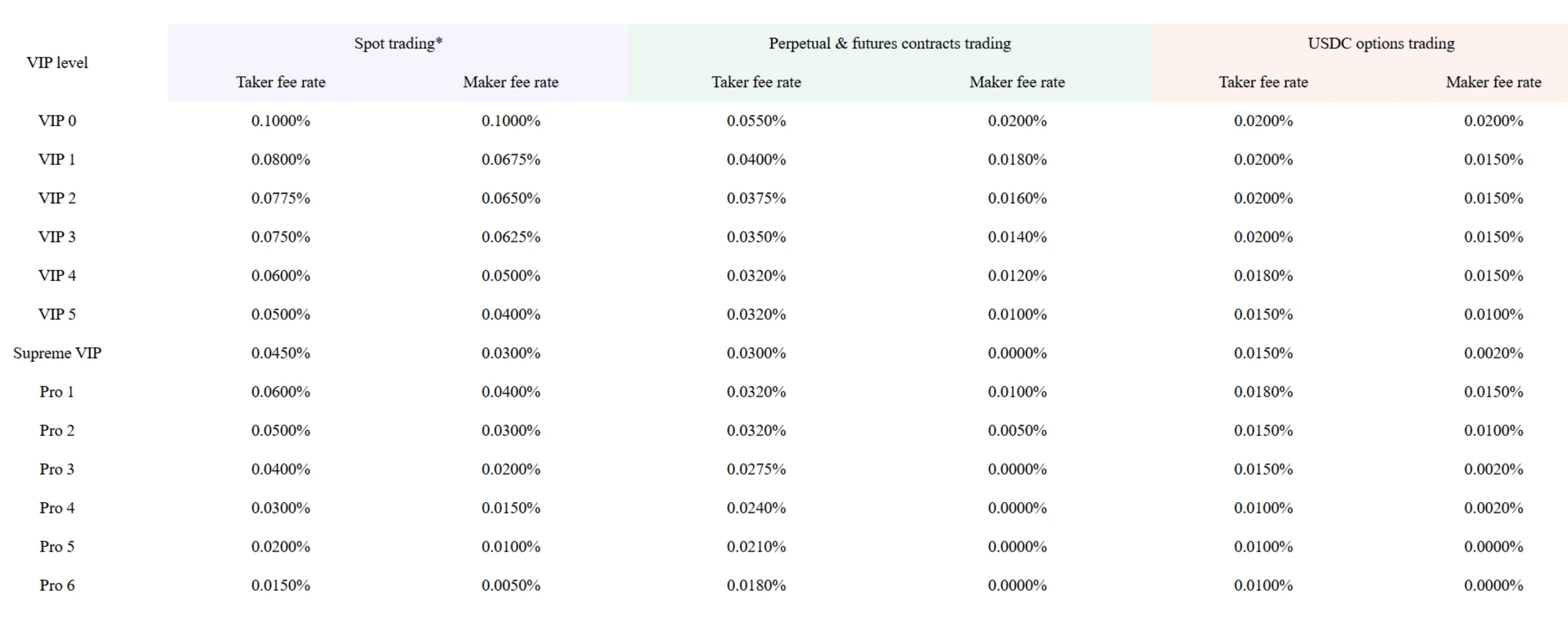
The exchange fee schedule starts at 0.075% and gets better with VIP tiers and CRO staking. That's competitive on paper. In practice, the big reason people choose Crypto.com is still the card ecosystem. If you want the strongest crypto card lifestyle product, this is the one. Coinbase Card is simpler. Crypto.com is richer. Also messier.
r/Crypto_com has the usual card-community split: users who love the ecosystem when the perks line up with how they already spend, and users who get annoyed once staking requirements, perk changes, or app complexity stop feeling worth it. Both camps have a point.
Use it if the card matters and you like app-first ecosystems. Skip it if you just want the cleanest place to buy BTC and leave.
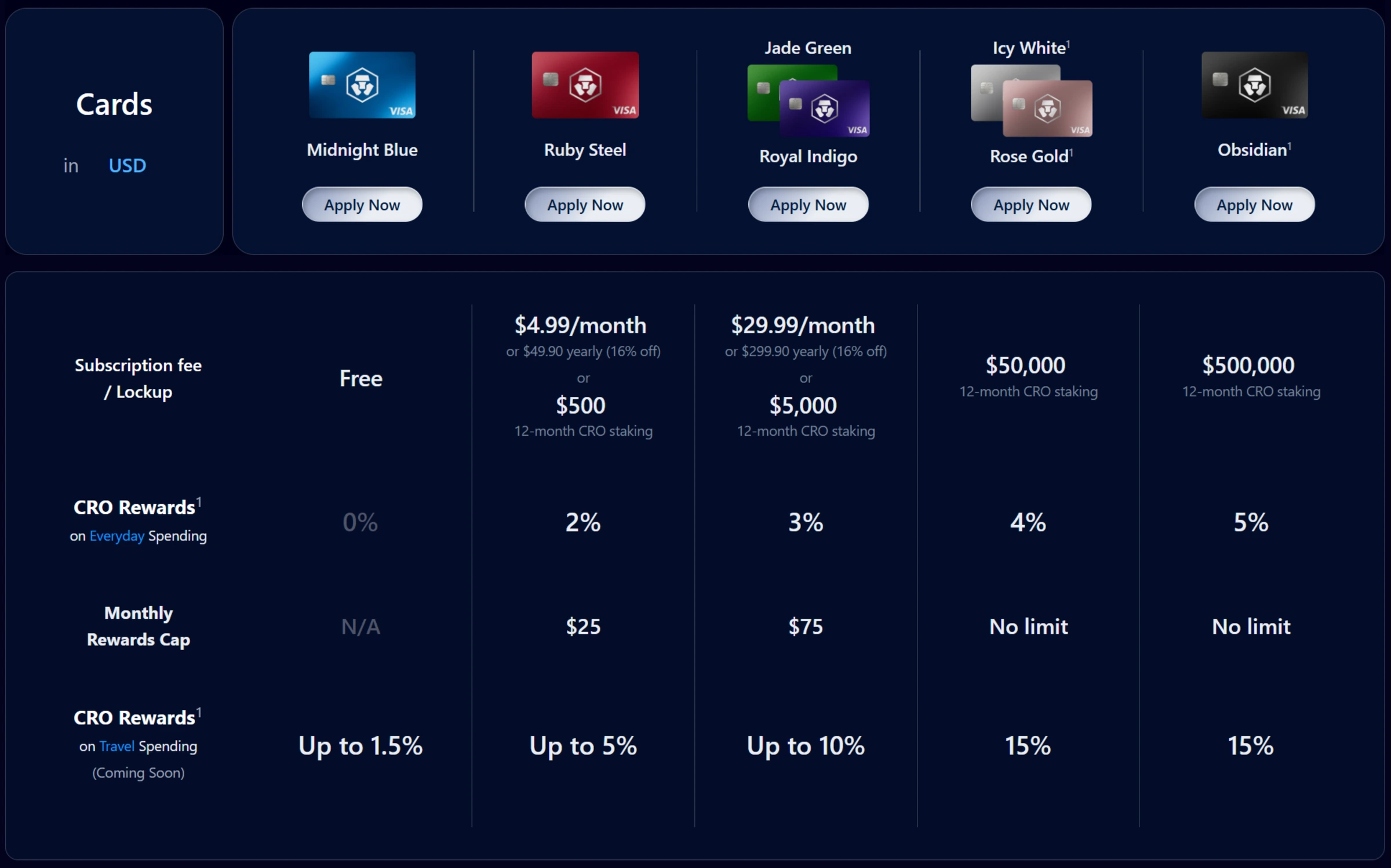
Best crypto card ecosystem — Visa debit with cashback tiers
Minimalists who just want to buy and hold
- Exchange fees start low enough to stay competitive
- Best card-centered ecosystem in this roundup
- Good major-coin access for normal holders
- Useful if you want one app for buying, holding, and card spending
- The product stack can feel bloated fast
- Card perks matter a lot less if you are not already planning to use them
- Not the simplest first exchange
- If you do not care about the card, the edge over Kraken gets thin quickly
The hidden fee section most roundups still phone in
This is where rankings get fake. Reviewers compare only spot fees because those are easy to place in a neat table. Real users pay elsewhere.
Coinbase: the order-book fees are already high for smaller accounts, and the moment you drift into instant buy or card buys the cost gets worse. It is the easiest place to overpay politely.
Kraken: less painful on the trading side, but you still need to check withdrawal network fees before you move coins out. That's true everywhere, and it matters more than people admit when you are moving small BTC or ETH amounts.
Binance, Bybit, OKX, Crypto.com: the headline fee can look great, then a card purchase, network choice, or inactive-asset withdrawal makes the total feel less heroic. Use bank transfer or order-book buying whenever possible. That's the boring move. It is also the right move.
Boring wins here.
And yes, if you're keeping records for taxes, every buy, sale, conversion, and sometimes even reward flow creates work later. If you are using more than one exchange, get a system in place early. Our crypto tax software roundup and portfolio tracker guide save a lot of pain here.
KYC and card reality in 2026
If you're trying to avoid KYC completely, the mainstream exchanges in this article are the wrong lane. Go read our no-KYC exchange guide. Binance, Coinbase, Kraken, Gemini, and Crypto.com are all compliance-first enough that this shouldn't surprise you.
On cards, the short answer is cleaner than the marketing. Crypto.com wins if card perks are central to your setup. Coinbase Card is the easier mainstream answer for US users who want something simple. Binance is no longer the card edge case worth choosing an exchange around by itself. Done.
And if you're staking directly through an exchange, read our staking platforms comparison before you click anything. Reward rates are one thing. Commission cuts and lockup mechanics are another.
The verdict
For most readers, pick Kraken . It is the best crypto exchange for people who want to buy major coins, keep fees reasonable, and avoid the two most common retail mistakes: overpaying at Coinbase and overcomplicating things at Binance.
If you are brand new, Coinbase is still the easiest first week. Just don't confuse easiest with cheapest. Upgrade your workflow fast or you'll keep donating fees for no reason.
If your north star is pure low-cost execution and you are outside the US, Binance and OKX deserve the first serious look. One has more gravity. The other has the cleaner EEA story.
Crypto.com is the card play. Bybit is the maybe-later trader's app. Gemini is the cautious US option if regulation soothes you more than pricing annoys you.
Most people do not need seven exchange accounts. They need one good exchange and a habit of withdrawing long-term holdings to cold storage. Pick Kraken, move the coins you care about, and close the extra tabs.