
Kraken vs Coinbase is usually framed as cheap exchange versus easy exchange. That is too soft. The real decision is whether the buyer is going to keep paying for comfort after the first week.
Kraken remains my default pick for most readers, but the fee advantage is smaller than it used to be. Coinbase is still the easiest first app, and that matters for a true beginner. Once you understand market orders, limit orders, network withdrawals, and why long-term coins should not sit on an exchange, Kraken still makes the more disciplined default. Its new entry tier makes that a trust-and-workflow recommendation rather than a cheap-trading claim.
Binance.US complicates the fee story. On April 22, 2026, Binance.US announced 0% maker and 0.02% taker Advanced Spot fees for every user on every pair. That does not make it the universal winner. It does mean any Kraken vs Coinbase fee comparison that ignores Binance.US is using an old benchmark.
This is an evidence-led comparison. I rechecked official fee, custody, and reserve sources on July 29, 2026 and recaptured every retained evidence screenshot. I did not create accounts, complete KYC, place trades, move funds, test withdrawals, or contact support.
If you are still choosing the broader exchange shortlist, start with our best crypto exchanges guide. EEA residents should branch to the post-deadline MiCA comparison of Kraken, Coinbase, and Crypto.com to verify the contracting entity and regional restrictions before funding. If Kraken xStocks are the reason you are comparing accounts, use the dedicated Kraken xStocks comparison before mistaking a tokenized certificate for a normal share. If the real job is Bitcoin-only recurring buys instead of multi-asset exchange access, the River vs Strike vs Swan DCA comparison is the cleaner branch. If the goal is cold storage after the first buy, read the hardware wallet comparison and the seed phrase backup guide before you treat an exchange account like a vault. For taxes after you start moving coins, our crypto tax software guide is the next boring decision that saves pain later.
-
#1 KrakenBest default for most holders: published fee tiers, current proof-of-reserves evidence, and a cleaner exchange-to-wallet habit
-
#2 CoinbaseBest first-week beginner ramp: easiest consumer app, clear previews, and legal custody terms, but less public fee-table clarity
-
#3 Binance.USFee benchmark to check: 0% maker and 0.02% taker Advanced Spot fees announced April 22, 2026
If I were sending a friend to one exchange today, I would start with Kraken . If that friend had never bought crypto before and needed the least intimidating first purchase, I would let them compare Coinbase . If the friend was fee-sensitive and eligible in the U.S., I would tell them to check Binance.US before funding either account.
The real decision is custody flow, not app comfort
The common beginner mistake is buying the exchange that makes the first purchase feel easiest, then never upgrading the habit. Coinbase is good at that first moment. It turns a bank-connected crypto buy into a familiar consumer app task.
That is useful. It is also the trap.
A serious exchange choice has four jobs: keep the trade bill readable, make the order type clear, let the buyer withdraw without drama, and support the move from exchange balance to self-custody. The best app for day one is not always the best default for month six.
The expensive mistake is leaving every decision inside the easiest interface. You pay spread on simple buys, skip limit orders, ignore the withdrawal plan, and then call it convenience. My take: Coinbase can be the right first app and still be the wrong long-term default.
Kraken vs Coinbase vs Binance.US comparison
| Feature | Kraken | Coinbase | Binance.US |
|---|---|---|---|
| Best job | Default exchange for holders | Easiest first purchase | Fee benchmark for U.S. spot traders |
| Public fee evidence | Cross-platform Tier 1 starts at 0.40% maker / 0.80% taker | Advanced fees are maker/taker, tiered, and previewed | 0% maker / 0.02% taker Advanced Spot announcement |
| Simple-buy caveat | Instant and RFQ-style flows can differ from Pro order book | Simple buy includes spread in the quoted price | Buy Crypto can include spread; Advanced Trading is the fee story |
| Trust evidence | Public proof-of-reserves page and ratios | Custody terms and public-company-style consumer trust | Fee evidence is stronger than the trust case here |
| Self-custody fit | Strong bridge from buy to withdrawal discipline | Good ramp, but buyers must graduate from simple buy | Useful if availability and withdrawal flow fit |
| Skip if | You only want the lowest possible U.S. spot fee | You need public fee-table certainty before signup | You want the safest default trust story, not the cheapest fee line |
| Action | Compare Kraken | Compare Coinbase | Compare Binance.US |
How I ranked the three exchanges
The ranking uses the same rubric for all three exchanges: Fee Clarity, Beginner Fit, Trust Evidence, Withdrawal Flow, and Value. Fee Clarity asks whether a buyer can understand the bill before trading. Beginner Fit asks whether the first purchase is survivable without becoming a forever tax. Trust Evidence asks what public proof supports the custody story. Withdrawal Flow asks whether the exchange fits a move to a hardware wallet. Value asks whether the tradeoff makes sense for the buyer this keyword attracts.
The ranking is not "lowest fee wins." If that were the whole article, Binance.US would be the easy answer and we could stop reading. But a fee table does not solve custody discipline, regional access, account review risk, withdrawal habits, or whether the buyer can use the product without turning every buy into a support problem.
Not close.
Kraken wins because it has the cleanest middle path: public tiers, proof-of-reserves evidence, enough beginner accessibility, and a better habit for someone who will eventually withdraw to self-custody. The July increase weakens its value case, so I would not choose Kraken merely for low entry fees. Coinbase stays close because the first-week ramp is genuinely easier. Binance.US remains the fee benchmark because its April change is too material to ignore.
Kraken's July 9 cross-platform update shows Tier 1 at 0.40% maker and 0.80% taker for $0+ 30-day spot volume. Tier 2 begins at $2,500 and Tier 3 at $10,000. The qualification table also references futures volume and assets on platform, so a buyer should verify the tier that actually applies rather than assuming the old Kraken Pro entry line still governs every account.
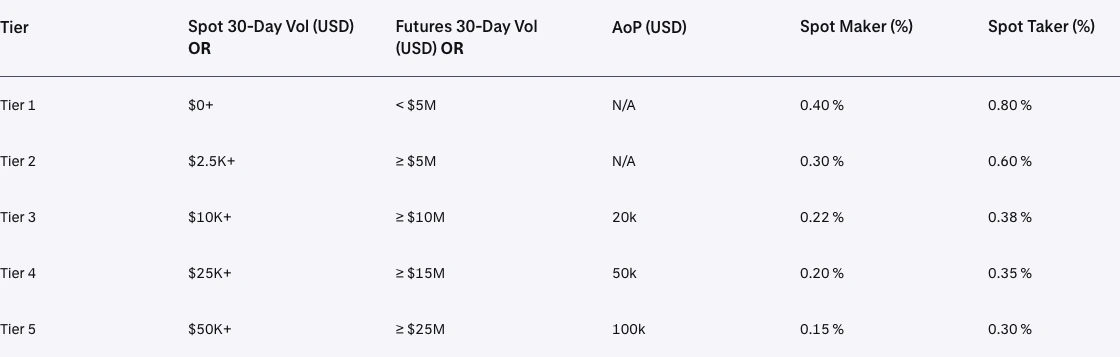
July's Kraken change makes the fee gap harder to ignore
At the new Tier 1 taker rate, a $1,000 order is roughly an $8 trading-fee event before withdrawal or payment-method costs. That is simple arithmetic from the published percentage, not a checkout quote. A $1,000 Binance.US taker order at its announced 0.02% headline rate is roughly $0.20.
Binance.US changed the comparison on April 22, 2026. Its announcement says Advanced Spot trading fees are now 0% maker and 0.02% taker for every user on every pair from the first trade. On the same $1,000 taker order, that headline trading fee is roughly $0.20.
That matters.
Coinbase is harder to model from public pages alone. The official Coinbase Advanced fee page says fees vary by maker/taker order type, the fee tier updates hourly, and the complete fee structure requires sign-in. The general Coinbase fee disclosure says simple buy and sell orders include a spread in the quoted price, while Coinbase Advanced has no spread because it interacts with the order book.
That is the practical difference. Kraken lets a public reader inspect the entry Pro table. Coinbase tells the reader to check account-specific fee tiers and the order preview. Binance.US puts the new public low-fee benchmark in the market. Those are three different buying experiences before a single coin moves.
Binance.US published the 0% maker and 0.02% taker announcement on April 22, 2026. The announcement applies to Advanced Spot, not its one-click buy and sell flow, and says fees remain subject to change.
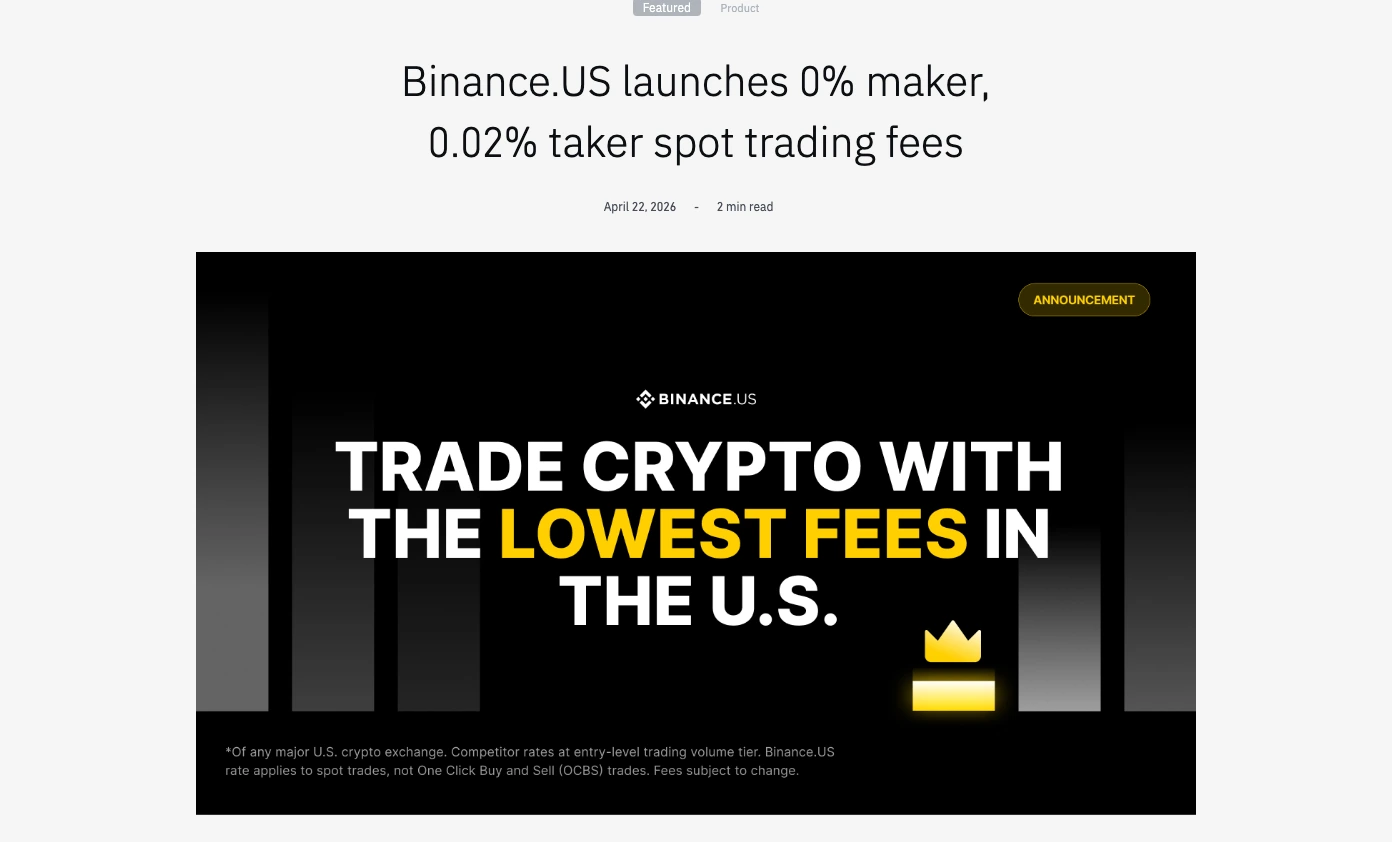
Custody terms matter after the buy button
The custody layer is separate.
Coinbase's U.S. user agreement says hosted wallet private keys are stored by Coinbase, supported assets and services vary by jurisdiction, and title to supported digital assets remains with the customer. That is a useful disclosure. It is not self-custody. The buyer still depends on Coinbase systems, account access, asset support, and the hosted wallet relationship.
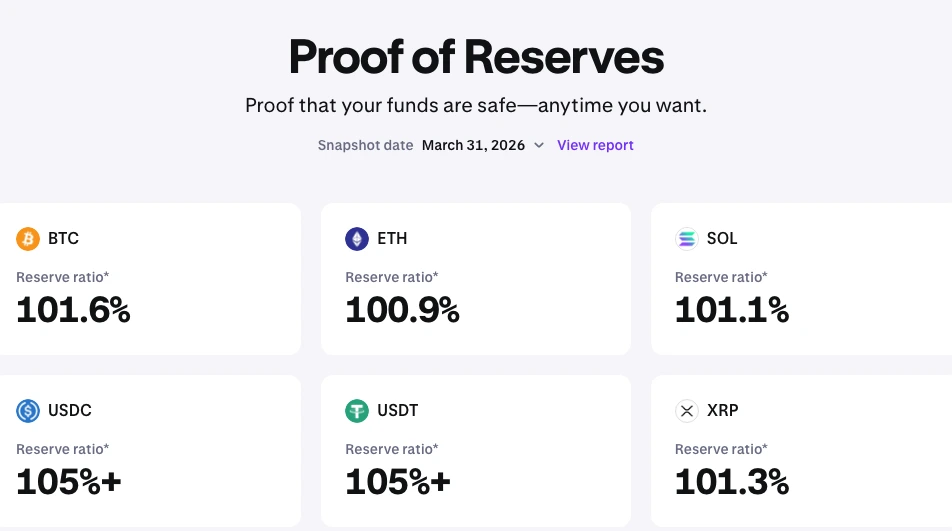
Kraken's proof-of-reserves page gives a different kind of public evidence. It does not prove every future operational outcome, and it does not remove the need to withdraw long-term holdings. It does give a buyer a concrete place to inspect the reserve story instead of relying on exchange reputation alone.
Binance.US has the cleanest current low-fee screenshot in this comparison. That is valuable, but it is not the same category of proof as custody terms or reserve evidence. A buyer who stops at the cheapest trading line is still skipping the part where money has to move safely from an exchange account to a wallet they control.
My rule is simple: use the exchange for entry, exit, and tactical rebalancing. Use a wallet for long-term control. The exchange should make that habit easier, not quietly train you to keep everything parked inside the app because the app feels comfortable.
How to choose without getting trapped by the first app
Pick Kraken if you want one normal exchange account and a path toward better habits. Use Pro-style order types when you can, batch withdrawals when that fits your risk tolerance, and move long-term holdings to self-custody once the amount justifies the extra work.
Pick Coinbase if this is a first purchase and the biggest risk is panic, not basis points. The beginner interface can be worth a short-term premium if it prevents a bad address copy, wrong network choice, or abandoned setup. Just decide now when you will graduate to Advanced or another exchange.
Check Binance.US if low U.S. spot fees are the reason you are comparing. Do not confuse "cheapest headline trading fee" with "best default custody decision." A low fee line is only useful if the asset, jurisdiction, funding method, withdrawal route, account review risk, and tax workflow make sense.
Here is the thing: the buyer is not really choosing between three logos. The buyer is choosing a workflow. Buy, verify, withdraw, record taxes, protect the seed phrase, and stop treating the exchange like the product.
The day-one setup I would want before funding anything
Before sending meaningful money to any exchange, I would decide the exit plan. Which asset are you buying? Which network will you withdraw on? Which wallet address is already verified with a tiny test transfer? Where will the transaction record go for taxes? Who can recover the wallet if you are unavailable?
That sounds slow. It is slower than pressing the big buy button.
It is also the difference between an exchange account and a crypto workflow. A buyer who has no wallet plan will usually keep delaying the withdrawal. A buyer who has no tax record plan will rebuild history later from exports and memory. A buyer who has no backup plan may buy the right coin and still create the wrong recovery setup.
This is why Kraken edges Coinbase for the default recommendation. Not because Coinbase is unsafe by default. Not because Binance.US should be ignored. Kraken simply fits the buyer who is ready to treat the exchange as one part of the system. Coinbase is better when the first purchase is the blocker. Binance.US is better when the trading line is the blocker. Those are different blockers.
1. Kraken: best default once the beginner phase is over
Kraken wins because it gives the buyer fewer excuses to stay sloppy. The fee schedule is public, the Pro entry rate is understandable, and the proof-of-reserves page is a better trust artifact than most exchange marketing pages.
The proof-of-reserves screenshot matters because it turns "trust us" into a specific page with a March 31, 2026 snapshot. The public view showed reserve ratios of 101.6% for BTC, 100.9% for ETH, 101.1% for SOL, and at least 105% for USDC when checked. That is not the same as saying an exchange is risk-free. It is public custody evidence worth weighing alongside an exit plan.
Use Kraken if you are past the first-buy anxiety and want a more disciplined default. Skip it if your only decision is the cheapest possible U.S. spot trade today or if you need a Coinbase-simple consumer ramp for the first purchase.
Kraken combines a public cross-platform fee schedule, current proof-of-reserves evidence, and a workflow that makes more sense after the first-buy phase.
Buyers who only care about the lowest U.S. spot trading fee, or beginners who need the simplest possible first app before learning order types.
Kraken leads because the buyer can inspect current fee tiers and reserve evidence before opening the account. The July fee increase cuts its value score, but the full exchange-to-wallet workflow still holds first place.
- Official cross-platform table showed 0.40% maker and 0.80% taker at Tier 1
- Proof-of-reserves page showed a March 31, 2026 snapshot and public reserve-ratio evidence
- Better long-term habit for buyers who will move coins to a hardware wallet
- Clearer public fee table than Coinbase Advanced for readers who have not signed in
- Fee tiers can also consider futures volume or assets on platform under the published qualification table
- The July Tier 1 increase materially weakens the small-volume value case
- Binance.US has a materially lower U.S. Advanced Spot headline fee
- Still requires the buyer to understand order types, withdrawal networks, and custody risk
- Not as frictionless as Coinbase for a first-ever crypto purchase
2. Coinbase: easiest first purchase, not the cheapest habit
Coinbase earns its place because ease has value. A new buyer who is nervous about banks, addresses, order books, and networks may be safer starting in the simplest app than pretending they are ready for a cheaper interface they do not understand.
The catch is fee transparency from the outside. Coinbase Advanced is maker/taker and tiered, but the official help page says the complete structure requires sign-in and that Advanced fees are shown on order preview. Coinbase's general disclosure also says simple buy and sell orders include spread in the quoted price, while Coinbase Advanced has no spread because it uses the order book.
Use Coinbase if the beginner ramp matters more than fee control this week. Skip it as the forever default if you are already comfortable with limit orders and withdrawals. That is when the convenience tax gets harder to defend.
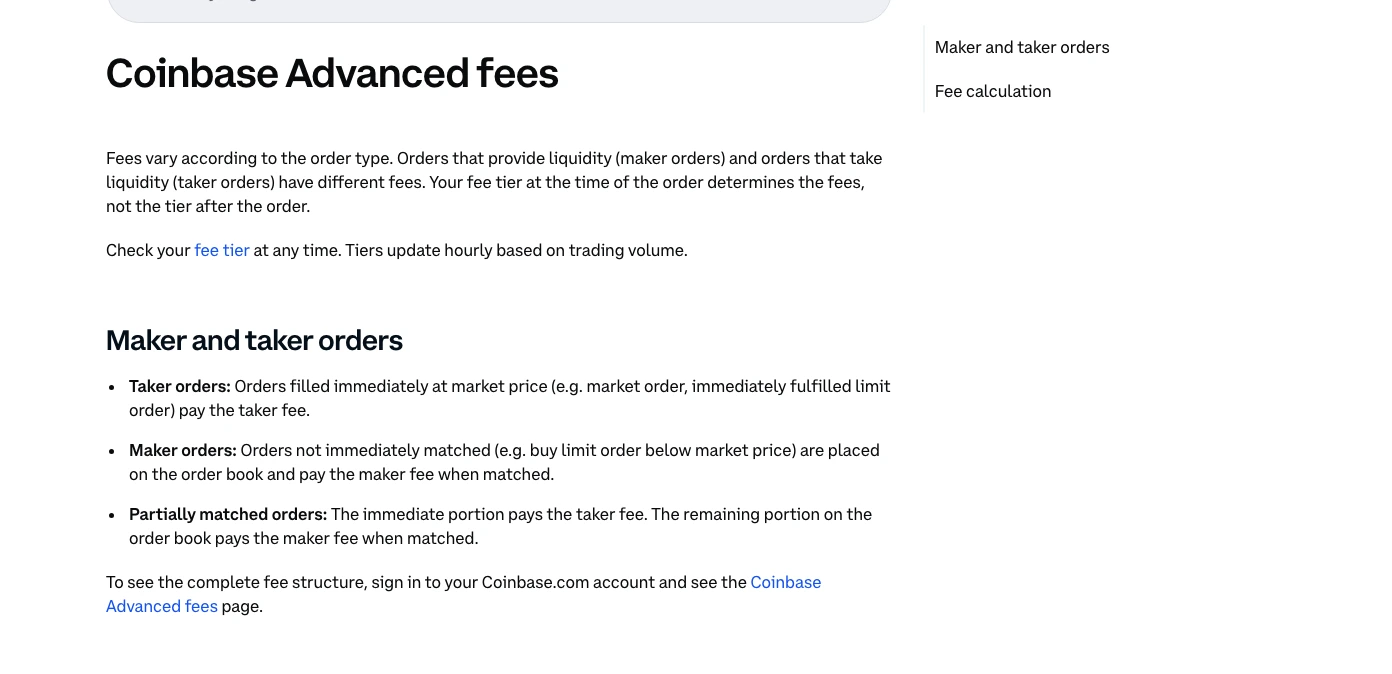
Coinbase is strongest when the buyer needs the first purchase to feel obvious, but the public fee evidence pushes serious buyers toward Advanced previews or a second exchange.
Buyers who already understand order books, want public fee-table certainty before signup, or are trying to minimize repeat trading costs.
Coinbase ranks second because beginner fit is excellent, but fee clarity and long-term value are weaker from public evidence than Kraken's.
- Best first-week consumer experience for many U.S. beginners
- Official disclosures say fees and spread appear before submitting a transaction
- Coinbase Advanced uses the order book and avoids simple-buy spread
- Hosted wallet terms explain that Coinbase stores private keys and that supported assets remain customer assets
- Strong fit for buyers who would otherwise abandon setup or make a worse beginner mistake
- Complete Coinbase Advanced fee structure requires sign-in from the official help page
- Simple buy and sell orders include spread in the quoted price
- Easy app comfort can keep buyers from learning limit orders, withdrawal networks, and self-custody
3. Binance.US: the fee benchmark, not the automatic default
Binance.US deserves a section because the new fee line changes the math. A 0% maker and 0.02% taker Advanced Spot schedule is not a small promo detail. It forces Kraken and Coinbase buyers to ask whether they are paying for trust, habit, convenience, or just inertia.
But this is the contrarian part: the best fee screenshot does not automatically win the exchange decision. Fees are only one failure mode. A buyer still has to check state availability, supported assets, funding method, withdrawal route, tax exports, account review friction, and whether Advanced Trading is the product they will actually use.
Use Binance.US if U.S. spot fees are the central problem and the rest of the workflow checks out. Skip it if your real fear is custody trust, account reliability, or making the wrong first crypto move. Cheap can still be the wrong shape.
The April 2026 Advanced Spot fee change makes Binance.US the public fee benchmark any U.S. Kraken vs Coinbase buyer should check.
Buyers who need the strongest default trust story, the simplest first app, or a workflow where state availability and withdrawals matter more than headline trading fees.
Binance.US ranks third because fee value is excellent, but the buyer-fit case is narrower than Kraken's default workflow and Coinbase's beginner ramp.
- Official April 22, 2026 announcement says 0% maker and 0.02% taker Advanced Spot fees
- Fee applies from the first trade with no subscription or volume requirement according to Binance.US
- Useful benchmark for U.S. buyers who mainly compare BTC, ETH, and other spot trading costs
- Help-center page separates Advanced Trading from Buy Crypto spread behavior
- The public announcement makes the headline Advanced Spot fee easy to verify before signup
- Fee leadership does not settle the broader custody and trust decision
- Buy Crypto, withdrawals, networks, and payment methods can still add separate costs
- State/product availability and account review friction still need checking before funding
Final verdict: Kraken wins, Coinbase stays useful, Binance.US changes the benchmark
For most readers, pick Kraken . It has the best mix of public fee evidence, proof-of-reserves evidence, and habits that point toward self-custody instead of endless simple buys.
Pick Coinbase when the first purchase has to be as simple as possible. Just do not confuse the easiest first week with the cheapest long-term workflow. Move to Advanced or a different exchange once you understand what the preview is charging.
Check Binance.US if the fee question is the main reason you are here. Its April 2026 fee change is real enough to affect the comparison, but it is not a magic answer to custody, availability, or withdrawal discipline.
The short rule: Coinbase for first comfort, Binance.US for fee pressure, Kraken for the best default exchange habit. Then withdraw long-term holdings when the amount is worth protecting properly.
Kraken is not the cheapest fee line after Binance.US changed the U.S. benchmark, but it has the strongest mix of public fee clarity, trust evidence, and long-term exchange-to-wallet discipline for most readers.
Try freeKraken vs Coinbase FAQ
Ready to check Kraken?
Use the verified route if the trade-offs still fit. If not, jump back to the summary and compare the alternatives.
Crypto and productivity editor focused on cost, custody risk, setup friction, exports, fees, and workflow drag. Prioritizes verifiable numbers and clear skip criteria over hype.
Lucas starts with total operating cost, then ranks tools by setup and recurring friction, custody or export, reversibility, and whether the decision still makes sense when the exit path is included.
Related Articles

Best Tokenized Stock Platforms for EU Users
EU stock-token platforms compared by legal wrapper, total cost clarity, shareholder rights, trading hours, and self-custody exit
Kraken xStocks, Robinhood Classic Stock Tokens, and Crypto.com compared for EU users by ownership, fees, rights, market hours, and wallet withdrawal.

MiCA Deadline: Kraken vs Coinbase vs Crypto.com in EU
Post-deadline EEA exchange verification guide
Kraken, Coinbase, and Crypto.com compared for EEA users after the July 1 MiCA deadline: entities, restrictions, fees, and safe transfer checks.