
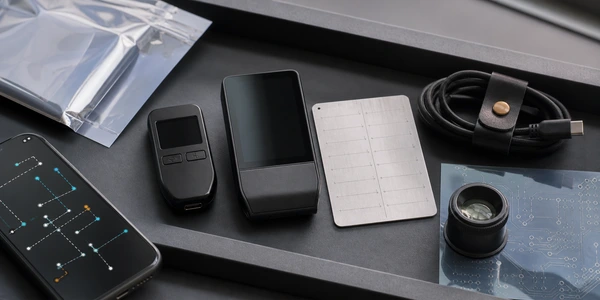
The expensive Trezor vs Ledger mistake is buying the device with the nicer spec sheet and then treating the recovery card like packaging trash.
My default answer is blunt: choose Trezor if the goal is cold storage you can reason about later. Choose Ledger if the goal is a richer app ecosystem, mobile signing, and wider asset handling inside one consumer wallet stack. Neither brand saves you from a sloppy backup. That part is still on you.
This is not a lab teardown or a hands-on device test. I did not order a new Trezor or Ledger, initialize a wallet, recover a seed, connect to Ledger Wallet or Trezor Suite, or sign a live transaction. I checked current official product pages, backup and recovery documentation, EU/Croatia prices rendered on July 29, and the site's live /go routes.
If you want the broader market first, start with our hardware wallet comparison. If your backup plan is still paper, read the metal seed phrase backup guide before shopping devices. And if the coins are still sitting on an exchange, our crypto exchange guide explains where the exchange job should end and self-custody should start.
-
#1 TrezorBest default — open-source security posture, owner-controlled backup options, and cleaner cold-storage discipline
-
#2 LedgerBest mobile ecosystem — five current signers, stronger phone workflow, Recovery Key, and optional Recover
If I were helping a friend move long-term coins off an exchange, I would compare Trezor first. If that friend was already deep in mobile DeFi, NFTs, staking, and app-based portfolio management, I would make them compare Ledger before deciding.
The real Trezor vs Ledger decision is recovery control
Most comparisons start with chips, screens, coin counts, Bluetooth, and app polish. Those matter. But they come after the boring question: what happens when the device is gone and its owner is stressed?
Trezor's pitch is transparency and recovery discipline. The Safe line leans into open-source design, Secure Element protection on newer devices, on-device confirmation, and wallet backup formats that can be upgraded into Multi-share Backup. Ledger's pitch is a more integrated signer ecosystem: Secure Element hardware, Ledger OS, Ledger Wallet, touchscreen devices, the Recovery Key on select models, and the optional Ledger Recover service.
The expensive mistake is pretending those are just feature bullets. They are different trust models. Trezor asks you to protect the backup yourself, with more transparent device and backup assumptions. Ledger gives you more product layers around signing and recovery, including paid identity-based recovery if you want it. Some readers will love that. Some should run from it.
Trezor vs Ledger comparison table
| Feature | Trezor | Ledger |
|---|---|---|
| Best fit | Cold-storage owner who wants transparency and recovery discipline | Mobile-first crypto user who wants a broader signer app ecosystem |
| Official EU prices seen | Sale/list: Safe 3 EUR 47/59; Safe 5 EUR 103/129; Safe 7 EUR 224/249 | Nano S Plus EUR 49; Nano X EUR 99; Gen5 EUR 179; Flex EUR 249; Stax EUR 399 |
| Trust model | Open-source security posture, Safe-series Secure Elements, public documentation | Secure Element, Ledger OS, Ledger Wallet, richer closed ecosystem |
| Recovery model | Single-share or Multi-share Backup; the owner controls the backup burden | Paper/metal backup, Recovery Key on touchscreen signers, optional Ledger Recover |
| Mobile ecosystem | Trezor Suite plus third-party wallets, less consumer-app gravity | Stronger Ledger Wallet app with touchscreen and classic signer lines |
| Main risk | Less polished mobile/app ecosystem for active multi-chain users | Managed recovery and closed-system trust may be the wrong fit |
| Action | Check Trezor | Check Ledger |
Price reality: entry price and flagship price tell different stories
The cheapest current price I saw was Trezor Safe 3 at EUR 47 during Trezor's Self-Custody Week sale, down from EUR 59. Ledger Nano S Plus rendered at EUR 49. That two-euro snapshot does not establish a permanent price winner; one side is a temporary promotion and both checkouts can change by region, tax, shipping, bundle, and sale state.
The lineup matters more than that entry snapshot. Ledger Nano S Plus is the stay-at-home classic signer at EUR 49. Ledger Nano X is EUR 99, Ledger Nano Gen5 is the new EUR 179 touchscreen signer, Ledger Flex is EUR 249, and Ledger Stax is EUR 399. Trezor's current sale rendered Trezor Safe 3 at EUR 47, Trezor Safe 5 at EUR 103, and Trezor Safe 7 at EUR 224, against list prices of EUR 59, EUR 129, and EUR 249.
Safe 3 remains the budget default. Safe 5 adds the touchscreen lane. Safe 7 is the premium Trezor purchase and currently sits near Ledger Flex, not Nano S Plus. So when someone says "Ledger is cheaper" or "Trezor is better value," ask which device and which sale window they mean. Entry-level and premium buyers are not making the same purchase.
Also: the checkout is regional. My official pages rendered EUR pricing for Croatia and the EU. U.S. buyers, bundle buyers, sale buyers, and people paying tax or shipping in another region may see a different final bill. That is why I care less about a tiny entry-price gap and more about whether the buyer understands the recovery model they are paying for.
1. Trezor: better default for transparent cold storage
Trezor wins my default slot because it keeps the buying decision closer to the actual custody job: store private keys offline, confirm transactions on the device, and maintain a recovery plan that does not depend on a consumer account layer.
The official Safe 7 page rendered at EUR 224 during the July 29 sale, down from EUR 249. It describes TROPIC01 alongside another Secure Element, open-source encrypted Bluetooth, wireless charging, and a post-quantum architecture for firmware, device authentication, and boot verification. That is the cleanest expression of Trezor's current direction: more convenience without abandoning the transparency story that made people choose Trezor in the first place.
Trezor is not automatically the cheaper brand. Its sale prices were EUR 47, EUR 103, and EUR 224 for Safe 3, Safe 5, and Safe 7; the same cards showed EUR 59, EUR 129, and EUR 249 as regular prices. Safe 3 is the sensible default for smaller balances. Safe 7 is the "I want the premium cold-storage device" purchase. Safe 5 sits in the middle if a touchscreen reduces setup stress.
The reason I keep coming back to Trezor is not that everyone needs the flagship. It is that the product line has a clean ladder. Safe 3 for boring cold storage. Safe 5 if a touchscreen reduces setup stress. Safe 7 for the most current Trezor security story when the premium is acceptable. You can argue about which model is best, but the purchase logic is legible.
Trezor Suite is less flashy than Ledger Wallet, and for some readers that is a negative. For cold storage, I do not mind it. A long-term holder should not need a hardware wallet to feel like a casino lobby, a DeFi portal, a collectibles dashboard, and a daily portfolio tracker. If the goal is to move coins off an exchange and leave them alone, quieter can be a feature.
The place where Trezor can frustrate active users is asset workflow. The official pages say you can manage thousands of coins and tokens, but the smoothness depends on the exact asset and wallet path. Some chains and use cases route through third-party wallets. That is not a dealbreaker, but it means a buyer with a messy multi-chain portfolio should not treat Trezor as automatically easier.
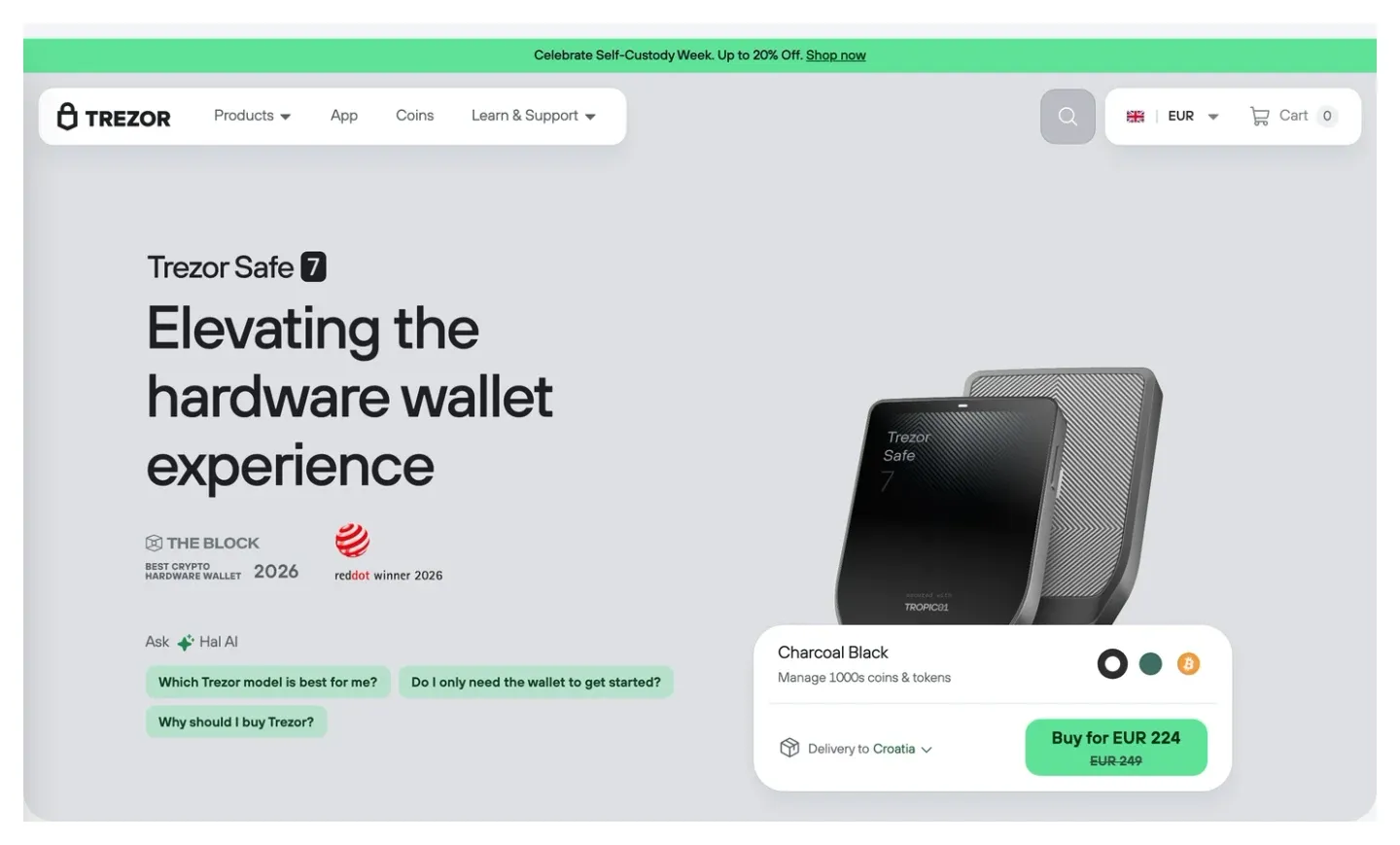
Trezor keeps the buyer focused on open-source security posture, on-device confirmation, and backup discipline instead of turning cold storage into an app subscription story.
Skip it if you want the richest consumer wallet app, Bluetooth/NFC signer ecosystem, NFT lock-screen polish, or 15,000+ asset marketing story.
Trezor ranks first because transparency and recovery control matter more for long-term cold storage, even though Ledger has the better app ecosystem.
- Open-source security posture remains the cleanest trust story for cautious holders
- Safe-series product pages show Secure Element protection and on-device confirmation
- Multi-share Backup path is useful when one backup location is the obvious weak point
- Safe 3 gives a lower-cost entry point without making the buyer jump straight to a flagship device
- Ledger has the stronger mobile-first app ecosystem
- Current sale pricing is temporary and regional, so the list-price decision still matters
- Some asset workflows still depend on third-party wallets instead of living cleanly inside Trezor Suite
- Multi-share Backup adds operational work and can be worse than one well-kept backup when the owner is disorganized
2. Ledger: better for mobile power users and app ecosystem depth
Ledger loses the default cold-storage recommendation but wins a different use case. If the hardware wallet should feel like part of a mobile crypto operating system, Ledger is hard to ignore.
Ledger's current comparison page now presents five products. Nano S Plus is EUR 49 and Nano X is EUR 99 in the classic backup-signer lane. Nano Gen5 is the new EUR 179 touchscreen option, Flex is EUR 249, and Stax is EUR 399. The three touchscreen signers are positioned for daily use; the two Nano classics are positioned for backup use. That is the Ledger advantage in one table: buyers can choose how close the signer sits to daily crypto life.
For active multi-chain users, that matters. A hardware wallet is not useful if it makes every send, swap, stake, or portfolio check feel like tax paperwork. Ledger Wallet is the cleaner consumer app story, especially if you want a stronger phone workflow.
But do not confuse app polish with lower trust burden. Ledger asks you to accept more of Ledger's ecosystem: Ledger OS, Ledger Wallet, Recover, Recovery Key on certain devices, and a more closed security architecture. That can be a reasonable trade. It is still a trade.
This is where I disagree with the simple anti-Ledger take. A lot of crypto users do not fail because they trusted a consumer app. They fail because self-custody becomes so annoying that they leave everything on an exchange. Ledger's app-first gravity can be safer for that person if it gets the coins off the exchange and into a device they will actually maintain.
The catch is that Ledger's best strengths are also the reason I do not make it the default. The more the hardware wallet becomes an account, app, device family, Recovery Key, and optional Recover service, the more the buyer has to be comfortable with Ledger as an ongoing product relationship. Some people want exactly that. Some people want the device to disappear into a drawer until they need to sign.
Nano S Plus is the clean budget Ledger if a classic USB signer is enough. Nano X keeps the familiar format with mobile connectivity. Nano Gen5 is the least expensive current touchscreen Ledger, while Flex and Stax charge more for larger e-ink hardware and premium design. I would not stretch to a touchscreen just because it looks modern, but I would consider one if clearer transaction review makes the buyer less likely to approve blindly.
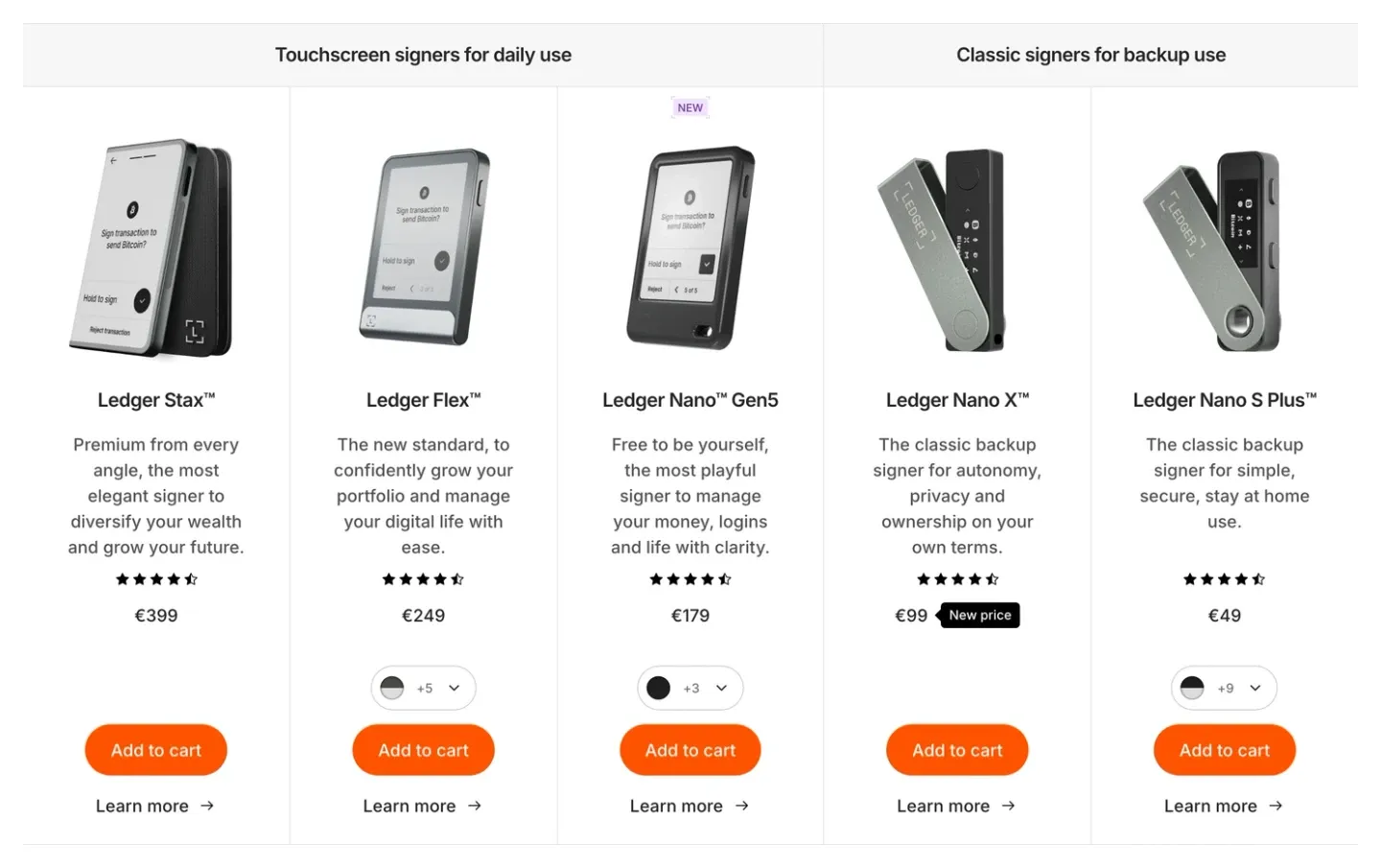
Ledger pairs a EUR 49 entry point with five current signers, a stronger consumer app ecosystem, touchscreen options, Recovery Key, and optional Recover.
Skip it if closed-system trust, optional identity recovery, or managed backup services make you less comfortable with cold storage.
Ledger scores higher for mobile ecosystem and asset breadth, but it ranks second because the recovery and closed-system trust tradeoffs are bigger for cautious holders.
- Nano S Plus keeps a low EUR 49 official entry point outside temporary competitor promotions
- Ledger Wallet and the five-device lineup make the phone-first workflow stronger
- Nano Gen5 creates a lower-priced touchscreen step below Flex and Stax
- Current touchscreen signers add clearer transaction review and Recovery Key support
- The richer ecosystem asks buyers to trust more Ledger-controlled layers
- Ledger Recover is optional, but identity-based recovery is not a fit for every cold-storage buyer
- The five-device lineup creates more choice but also more room to overbuy
- Recovery Key and Ledger Recover solve different problems and add decisions the buyer must understand
Ledger Recover vs Trezor Multi-share Backup
This is where the decision stops being a hardware comparison and becomes a temperament test.
Trezor's backup story stays buyer-controlled. Its current guide says Multi-share Backup works on Safe 7, Safe 5, Safe 3, and Model T, supports one to 16 shares, and requires a chosen threshold to recover the wallet. That is useful if the threat is one notebook, one house, one safe, or one forgetful human becoming the entire recovery plan.
The catch: you have to manage it. Multi-share Backup does not make you organized. It just gives organized buyers a better structure.
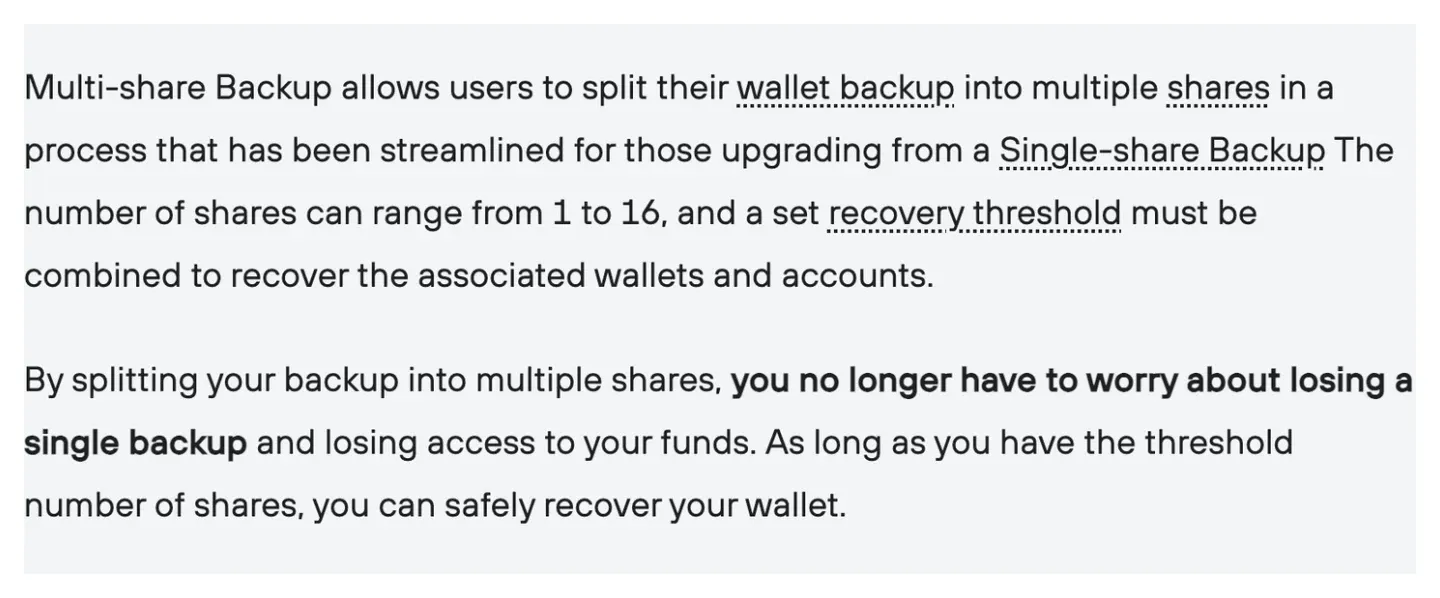
Ledger gives buyers more recovery products. Ledger Recovery Key is the offline NFC backup included with current touchscreen signers. Ledger Recover is the optional subscription service: the official page describes a digital spare key created and split inside the Secure Element, pieces tied to the subscriber's identity, and restoration through identity verification in Ledger Wallet. The current offer starts with one free month, while Ledger's official Recover page lists $9.99/month after the trial.
I do not think Ledger Recover makes Ledger bad. I do think it makes Ledger a worse default for someone who wants cold storage to stay as far away from identity recovery and subscription state as possible.
That distinction matters. "Managed recovery exists" is not the same claim as "your wallet is unsafe." The useful question is whether managed recovery belongs in your personal threat model. If your biggest risk is losing the seed phrase, Ledger Recover may feel practical. If your biggest risk is connecting identity, subscription status, and recovery providers to a cold-storage plan, it will feel backwards.
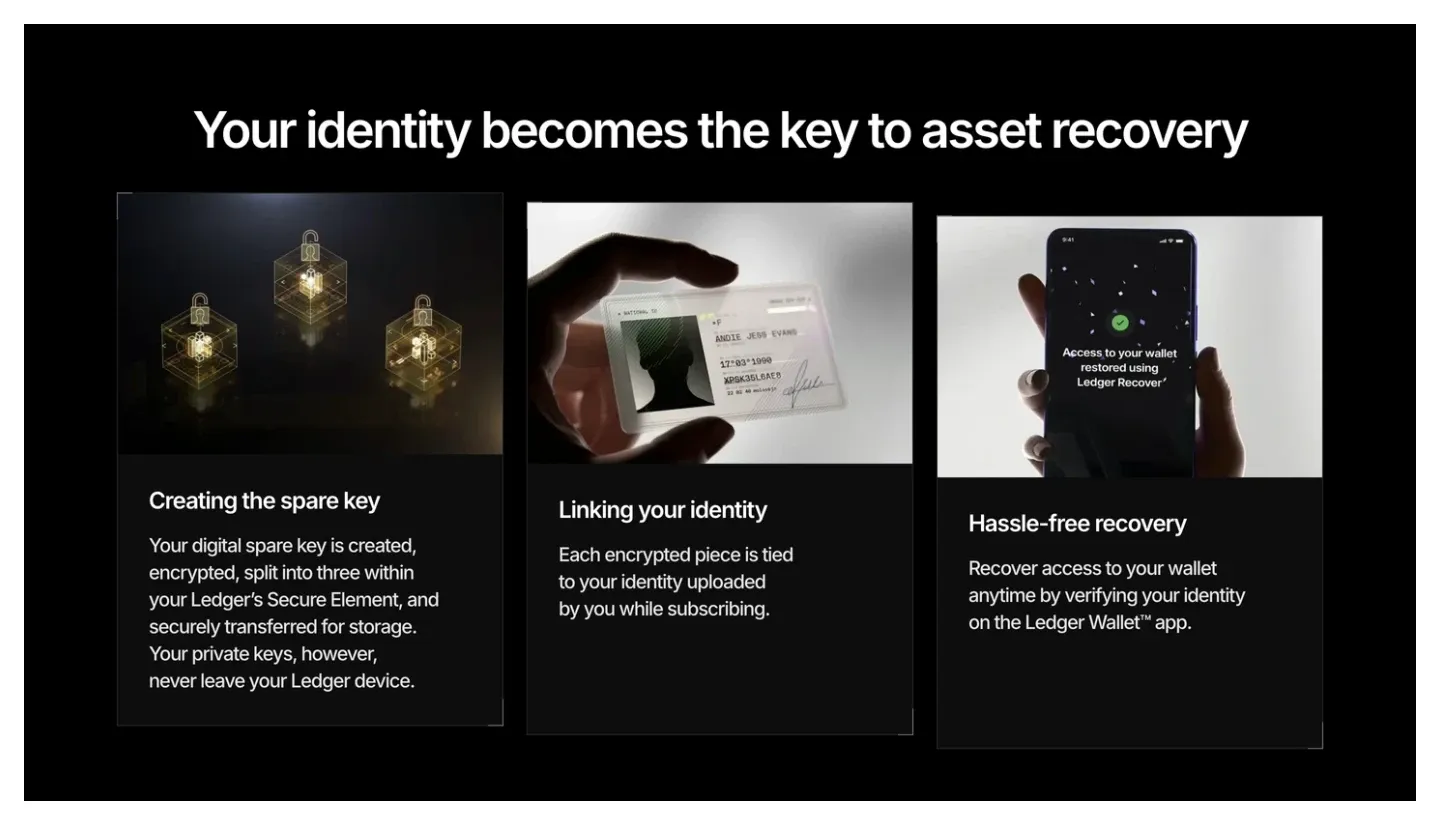
The counterintuitive take: Ledger's recovery products may be safer for the buyer who would otherwise lose the paper seed in six months. The purist answer is not always the practical answer. But if you are careful enough to maintain offline backups, Trezor's simpler trust shape is easier to defend.
For Trezor, the danger is different. A buyer can read "Multi-share Backup" and assume the harder setup is automatically safer. It is not. Splitting a backup across multiple locations helps only when the shares are stored, labeled, and recoverable under stress. A three-share setup that nobody understands is worse than a simple single backup stored well.
For Ledger, the danger is outsourcing too much confidence to the recovery product. Recover can help the right buyer, but it does not remove the need to understand what the device signs, where the backup lives, and who can reset account access around the wallet. A hardware wallet does not fix weak email security, poor password manager recovery, or a compromised exchange account.
3. Which Trezor or Ledger device should you actually buy?
Choose Trezor Safe 3 if you are moving a modest long-term stack off an exchange and want the simplest open-source default. The current sale makes it the lowest rendered price in this check, but the normal list price remains EUR 59.
Choose Trezor Safe 7 if you want Trezor's most current flagship story: TROPIC01, dual Secure Elements, Bluetooth, wireless charging, higher-end build, and a device meant to feel premium. It is overkill for tiny balances. It is not silly for a serious long-term stack.
Choose Ledger Nano S Plus or Nano X if you prefer the classic signer format. Nano S Plus is the EUR 49 stay-at-home entry. Nano X is the EUR 99 step for buyers who want the familiar Nano form with a more mobile role.
Choose Ledger Nano Gen5, Flex, or Stax if a touchscreen is the reason you are considering Ledger. Gen5 is the EUR 179 entry, Flex is the EUR 249 middle option, and Stax is the EUR 399 premium device. Compare display and form factor before assuming the most expensive signer protects the keys better.
Do not overfit the device line. The real test is whether you can explain your backup plan in one paragraph and execute it without future-you needing a forensic investigation.
How to choose between Trezor and Ledger
Pick Trezor if the coins are long-term holdings, the buyer values open-source security posture, and the backup plan will be handled deliberately. It is the better default for people who think "cold storage" should stay boring.
Pick Ledger if the wallet will be used actively with a phone, many assets, staking, NFTs, swaps, or app-driven workflows. Ledger is the stronger everyday crypto gadget. That sounds like praise because it is. It is also the reason I do not make it the default cold-storage pick.
Pick neither yet if the buyer still does not know where the recovery phrase will live. Buy a metal backup first, decide whether one-share or multi-share recovery fits, then pick the device. Hardware wallet shopping before recovery planning is just expensive procrastination.
One more blunt filter: if you are holding most of your crypto on Kraken, Coinbase, or another exchange because the hardware-wallet setup feels scary, start smaller. Move a test amount. Verify the receive address. Practice restoring with a spare device only when you can afford the process. A hardware wallet that intimidates you into doing nothing is not protecting anything.
My practical sequence is boring on purpose. First, decide the wallet family. Second, decide the backup format. Third, buy the device from the manufacturer or an authorized channel. Fourth, move a small test amount and verify you can find the receive address again without guessing. Fifth, document the recovery plan somewhere safe enough that future-you will understand it.
Do not rush that sequence because a checkout page is running a discount. A rushed hardware-wallet setup is just a very expensive way to create a new single point of failure.
Trezor vs Ledger FAQ
Final verdict: recovery discipline or mobile depth?
Trezor is my default recommendation for long-term cold storage because the trust model is cleaner. Open-source security posture, Trezor Safe backup options, and a less app-centered recovery story fit the job better for cautious holders.
Ledger is the better pick when the wallet is part of an active mobile crypto workflow. If you want the stronger app ecosystem, wider official asset story, Bluetooth/NFC touchscreen hardware, and optional recovery products, Ledger earns the comparison. I would not pretend otherwise.
The wrong buyer warning matters more than the winner. Do not choose Ledger just because it feels easier if identity-based recovery makes you uncomfortable. Do not choose Trezor just to signal purity if you will lose the backup or never use the device because the workflow feels too manual.
Cold storage is not a personality badge. It is a recovery plan with a device attached.
Trezor is the cleaner default for buyers who value transparent cold storage and recovery discipline. Ledger is the stronger mobile ecosystem pick for active multi-chain users who accept the added recovery and ecosystem tradeoffs.
See pricingReady to check Trezor Safe 7?
Use the verified route if the trade-offs still fit. If not, jump back to the summary and compare the alternatives.
Crypto and productivity editor focused on cost, custody risk, setup friction, exports, fees, and workflow drag. Prioritizes verifiable numbers and clear skip criteria over hype.
Lucas starts with total operating cost, then ranks tools by setup and recurring friction, custody or export, reversibility, and whether the decision still makes sense when the exit path is included.
Related Articles
Best Tokenized Stock Platforms for EU Users
EU stock-token platforms compared by legal wrapper, total cost clarity, shareholder rights, trading hours, and self-custody exit
Kraken xStocks, Robinhood Classic Stock Tokens, and Crypto.com compared for EU users by ownership, fees, rights, market hours, and wallet withdrawal.

MiCA Deadline: Kraken vs Coinbase vs Crypto.com in EU
Post-deadline EEA exchange verification guide
Kraken, Coinbase, and Crypto.com compared for EEA users after the July 1 MiCA deadline: entities, restrictions, fees, and safe transfer checks.