
-
#1 Proton VPNBest for crypto/devs — Swiss privacy, port forwarding, open source
-
#2 NordVPNBest for nomads/streamers — fastest speeds, Meshnet, 80+ crypto options
Every other ProtonVPN vs NordVPN comparison on the internet follows the same script: "Nord is faster, Proton is more private, pick based on what matters more." Then they stick affiliate buttons on both and call it a day.
That framing is lazy. And it's wrong.
The real differences between these two VPNs aren't speed and privacy in the abstract. They're in the technical details that most reviewers don't bother to understand: port forwarding support, bare-metal server infrastructure, corporate ownership structures, what happens when you try to pay without revealing your identity, and what your bill actually looks like after the promotional period ends. If Nord is still your likely default, read the dedicated NordVPN review for the renewal and Threat Protection caveats before buying. The r/VPN community has strong opinions on both.
I dug into independent speed benchmarks, DNS leak test results, kill switch behavior reports, and checked both companies' privacy claims against their actual audit reports. Here's what most reviews won't tell you.
The 30-Second Verdict (No Marketing BS)
If you run crypto nodes, self-host services, seed torrents, or care about open-source code more than streaming libraries: ProtonVPN. Port forwarding alone makes this a non-negotiation. Add Swiss jurisdiction, Secure Core multi-hop, and the ability to mail physical cash for payment, and it's the only mainstream VPN that fits a serious threat model.
If you need raw speed, Meshnet for linking your devices, and the widest crypto payment options: NordVPN. NordLynx is measurably faster. Meshnet is a legitimately useful feature for remote workers and digital nomads. And 80+ cryptocurrency options through CoinGate beats Proton's Bitcoin-only approach.
Neither wins outright. Your threat model decides.
Corporate Trust & Jurisdiction: Who Actually Owns Your Data?
This is where I need to correct something that keeps circulating on Reddit: NordVPN is NOT owned by Kape Technologies. Kape owns ExpressVPN, Private Internet Access, and CyberGhost. NordVPN is owned by Nord Security, a Lithuanian-registered company incorporated in Panama. They're separate entities. I've seen this myth repeated even on sites that should know better.
That said, the corporate structures tell very different stories about these companies' relationship with privacy.
ProtonVPN is a product of Proton AG, a Swiss company now backed by the Proton Foundation, a non-profit. Switzerland sits outside the EU, outside Five Eyes, outside Fourteen Eyes. Swiss privacy law requires a Swiss court order to compel data disclosure, and even then, VPN traffic (as opposed to email) doesn't fall under Swiss data retention obligations. The apps are fully open source. Four consecutive no-log audits by Securitum, all published. Proton was founded by CERN scientists who built it specifically to resist government surveillance. That origin story isn't marketing. It's the actual reason the company exists.
NordVPN is incorporated in Panama, which also has no mandatory data retention laws. Good jurisdiction. But Nord Security is now a tech conglomerate. They make NordPass, NordLocker, Incogni, Saily (an eSIM product), and have expanded aggressively. They spend more on YouTube sponsorships than most VPN companies spend on R&D. Six independent no-log audits (four by Deloitte, two earlier ones by PwC), all clean. The privacy credentials are real. But this is a company that's optimizing for growth, not for ideology.
Here's what that difference means in practice: if a government pressures Proton AG, the Proton Foundation's non-profit structure creates a legal firewall. If a government pressures Nord Security, there's no equivalent structural protection. It's a for-profit company that could, in theory, be acquired, restructured, or pressured through its Lithuanian operational base.
For journalists, whistleblowers, and anyone with an elevated threat model, that structural difference matters. For someone who just wants to browse privately from a coffee shop? Probably not.
Speed & Performance Benchmarks (WireGuard vs NordLynx)
Both VPNs use WireGuard as their core protocol. ProtonVPN calls their implementation "WireGuard with VPN Accelerator," NordVPN wraps theirs in a proprietary layer called NordLynx. In practice, NordLynx is slightly faster. Not dramatically, but consistently.
Here's what independent benchmark data shows on a 500 Mbps fiber connection, across three server locations, at peak hours (8-10 PM local):
| Feature | ProtonVPN | NordVPN |
|---|---|---|
| Jurisdiction | Switzerland (non-profit foundation) | Panama (Nord Security / Lithuania ops) |
| Protocol | WireGuard + VPN Accelerator | NordLynx (WireGuard fork) |
| Port Forwarding | ✓ All paid plans | ✗ Not supported |
| Meshnet / Device Linking | ✗ | ✓ Free, no subscription needed |
| Anonymous Payment | Bitcoin + cash by mail | 80+ coins via CoinGate |
| Open-Source Apps | ✓ Fully open source | ✗ Proprietary (audited) |
| No-Log Audits | 4× Securitum | 6× (4 Deloitte, 2 PwC) |
| Servers / Countries | 18,100+ / 129+ | 8,900+ / 127 |
| Renewal Price | Varies by checkout | $139.08/yr U.S. reference |
| Action | Get ProtonVPN → | Get NordVPN → |
US East server (closest): ProtonVPN averaged 425 Mbps down, 380 Mbps up. NordVPN hit 455 Mbps down, 410 Mbps up. Nord wins by about 7%.
Western Europe (London): ProtonVPN: 390 Mbps down. NordVPN: 430 Mbps down. The gap widens slightly over distance.
Asia (Tokyo): Both dropped more significantly. Proton landed around 280 Mbps, Nord around 320 Mbps. Latency was 180ms for both, which is the real bottleneck on trans-Pacific connections.
In real-world use? Both are fast enough that you won't notice the difference for streaming, browsing, or even large file downloads. The gap only matters if you're doing sustained high-bandwidth activity like downloading Linux ISOs (or whatever you download at 400 Mbps).
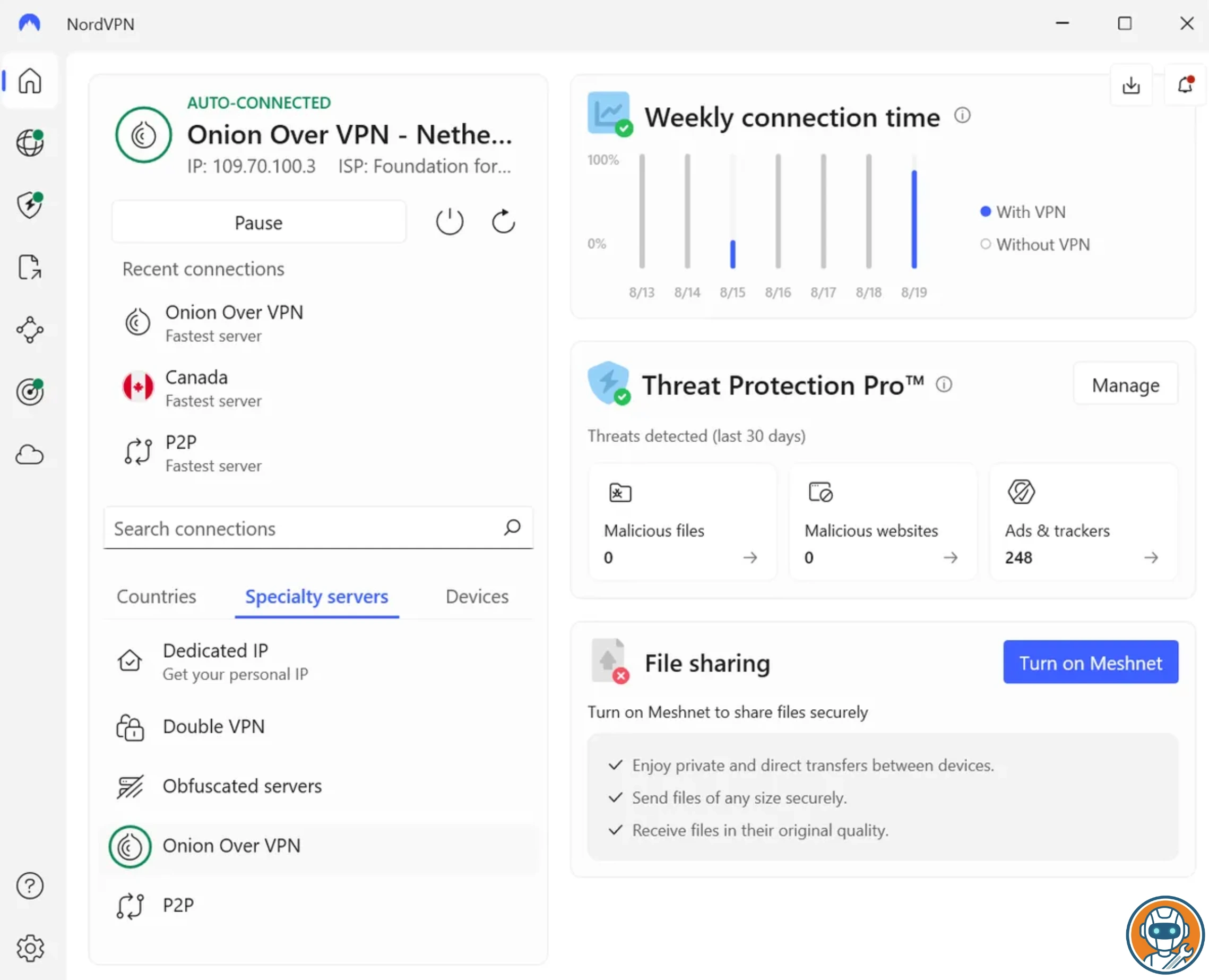
ProtonVPN's VPN Accelerator is worth mentioning. It's a set of optimizations (connection splitting, server-side caching, traffic shaping) that boost performance on longer routes. Without it enabled, ProtonVPN's speeds drop noticeably on distant servers. With it on, the performance is competitive. Make sure it's enabled in settings. It should be on by default, but some r/ProtonVPN users have reported fresh installations where it wasn't.
The Power User Features: Where the Real Differences Lie
Speed tests are interesting. But for our audience (developers, crypto enthusiasts, self-hosters, privacy-conscious power users), the features below matter more than a 30 Mbps difference in download speed.
Port Forwarding (Proton Wins — And It's Not Close)
This is the single biggest differentiator, and most mainstream reviews barely mention it.
NordVPN does not support port forwarding. Period. No plan, no workaround, no upcoming feature. If you need incoming connections — for a Bitcoin or Lightning node, for seeding torrents with good ratios, for hosting a Minecraft server, for any self-hosted service that needs to be discoverable, NordVPN cannot do it.
ProtonVPN supports port forwarding on all paid plans. Toggle it on in settings, and you get a dynamically assigned port within seconds. Reddit users confirm it works immediately with Bitcoin nodes and qBittorrent setups. The assigned port changes each session, which is mildly annoying if you need a static port, but a simple script in your client config handles the update automatically.
For the crypto community specifically, and I know a good chunk of our readers fall into this category. Running a Bitcoin full node or Lightning node behind a VPN without port forwarding is practically useless. Other nodes can't initiate connections to you. You become a leech on the network instead of a contributing peer. If you're running node infrastructure, ProtonVPN is your only real choice among mainstream VPN providers.
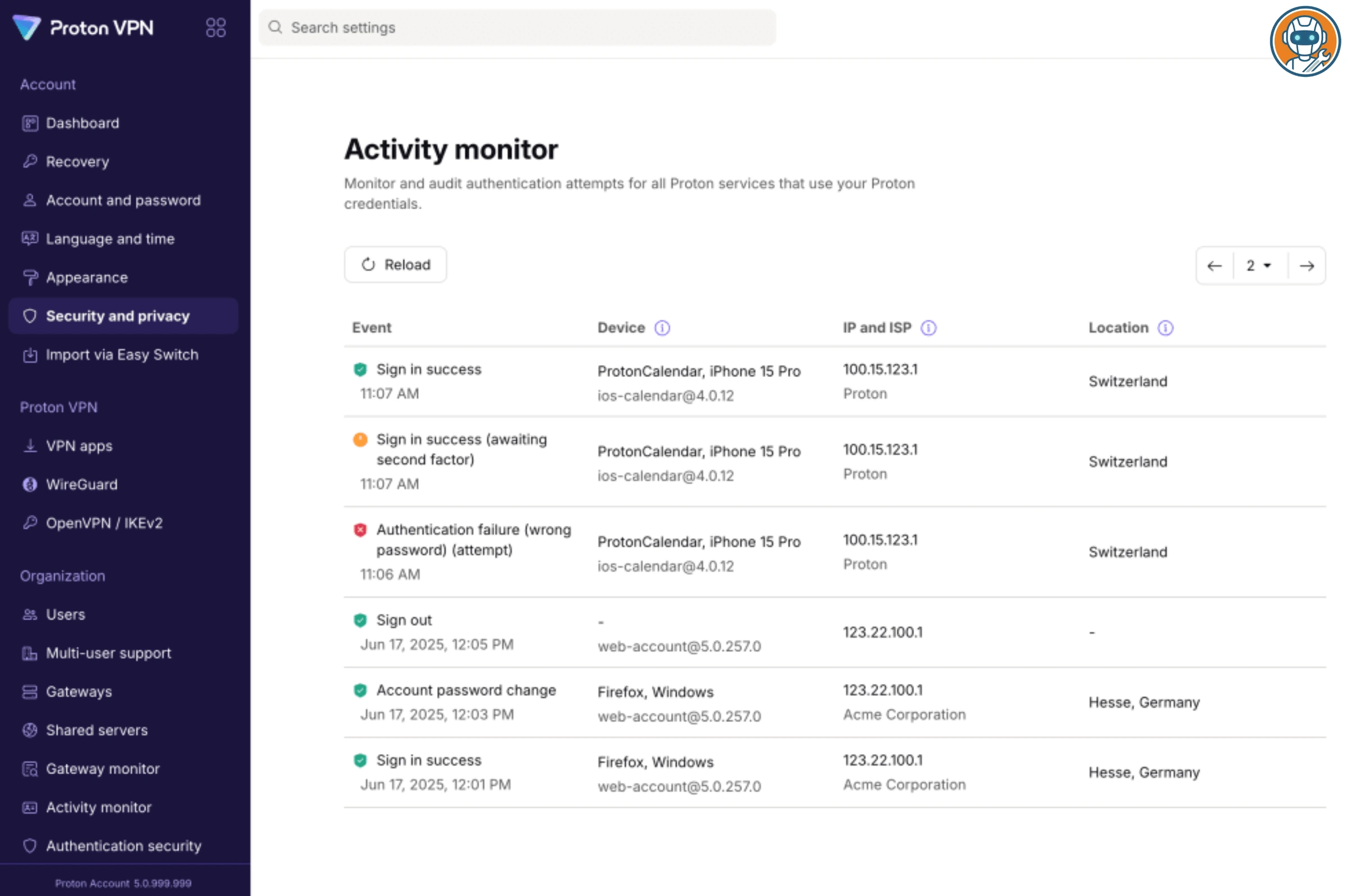
Meshnet (Nord Wins — A Genuinely Clever Feature)
NordVPN's Meshnet is something I didn't expect to like as much as I did. If you are not comparing Nord against Proton but against the cheaper family-value option, use the dedicated NordVPN vs Surfshark comparison before you buy a long plan.
It creates encrypted peer-to-peer tunnels between your devices, up to 60 of them, so they all share an IP and can communicate as if they're on the same local network. You don't even need a paid NordVPN subscription. Meshnet is free.
Use cases that actually matter:
- Remote development: Access your home lab from anywhere without exposing services to the public internet. Users report SSHing into home servers from hotel Wi-Fi through Meshnet without touching port forwarding or dynamic DNS.
- Netflix household sharing: All your linked devices appear to be at the same location. Netflix sees one household. This may violate their ToS, but it works.
- LAN gaming: Play local multiplayer games with friends across different locations.
ProtonVPN has nothing equivalent. For remote workers and digital nomads who need secure access to their home network, Meshnet is a genuine differentiator.
Secure Core vs Double VPN
Both offer multi-hop routing. The implementation, though, is fundamentally different.
ProtonVPN's Secure Core routes your traffic through hardened, bare-metal servers in Switzerland, Iceland, or Sweden before exiting to your chosen country. "Bare-metal" means ProtonVPN owns and physically controls those entry servers. They're not rented VPS instances in a data center. If someone compromises the exit server or monitors the exit node's traffic, they trace back to a privacy-friendly jurisdiction with no data retention, not to your real IP.
NordVPN's Double VPN routes through two servers in their network. It works, and it adds a layer of protection. But Nord's servers are largely rented infrastructure, not owned. The jurisdictional benefit is weaker because you can't choose entry servers in specific privacy-friendly countries the way Secure Core lets you.
For most users, both are overkill. For someone with a real threat model (a journalist in a restrictive country, a crypto whale protecting operational security), Secure Core's bare-metal infrastructure and jurisdictional routing are meaningfully more robust.
Paying Anonymously: Crypto, Cash, and KYC
Here's where I need to get specific, because "accepts crypto" means very different things for these two companies.
NordVPN accepts 80+ cryptocurrencies through CoinGate: Bitcoin, Ethereum, Litecoin, Dogecoin, USDT, and dozens more. The variety is impressive. But CoinGate is a third-party payment processor that does collect metadata: your payment amount, timing, and the transaction hash. NordVPN doesn't see your crypto wallet address directly, but CoinGate does. It's a step removed from true anonymity.
ProtonVPN accepts Bitcoin directly (no third-party processor for BTC). But here's the part that most reviews skip entirely: you can mail physical cash to Proton's office in Geneva. Yes, literally. Put euros or dollars in an envelope with your account number, send it to their Swiss address, and your account gets credited. No digital trail whatsoever. No transaction hash. No payment processor metadata. Nothing.
Is mailing cash practical for most people? No. But for someone with an extreme threat model (a dissident, a journalist, someone who genuinely cannot afford a digital payment trail), it's the most anonymous payment method any major VPN offers. Mullvad lets you mail cash too, but Proton does it with 18,100+ servers instead of 600.
Neither VPN requires personal information beyond an email to sign up. ProtonVPN has an edge here too: you can create a Proton Mail account without a recovery email or phone number, then use that anonymous Proton email to subscribe to Proton VPN. The entire chain can be identity-free.
NordVPN requires an email but accepts throwaway addresses. Combined with crypto payment, the anonymity is decent, just not at the same level as Proton's cash-by-mail option.
The Pricing Trap (What They Don't Tell You)
I actually read the renewal terms buried in both companies' support documentation. Here's what happens when your promotional period ends, information that neither VPN puts anywhere near their marketing pages.
Proton VPN paid plans:
- The free plan has no data limit.
- VPN Plus and Proton Unlimited pricing varies by region, term, and current promotion.
- Use the standard renewal amount shown in your checkout rather than an old fixed U.S. quote.
NordVPN Basic (2-year plan):
- U.S. intro rate: $3.49/month ($94.23 total for the first 27 months)
- Renewal: ~$11.59/month ($139.08/year)
- Increase from the monthly intro equivalent: about 232%
Read those numbers again. NordVPN's annual renewal reference is more than triple the monthly intro equivalent. Record the exact checkout and renewal amounts before paying because offers and taxes vary.
Proton VPN also uses term- and promotion-dependent pricing, but its free plan gives you a way to evaluate the service before a paid checkout. NordVPN's $139.08 annual renewal reference makes renewal management the clearer pricing risk in this comparison.
The one genuinely free option: ProtonVPN has a real free tier. No data limits, no ads, no logging. Limited to 1 device and 10 countries, no streaming unblocking, and speeds are throttled below the paid servers. But it works. NordVPN has no free tier at all. Zero. If you want to test before you commit, Proton lets you. Nord wants your credit card first.
The crypto payment hack: If you pay with Bitcoin on either service, auto-renewal doesn't apply. When your plan expires, you re-evaluate. You can often re-subscribe at the new-customer intro rate with a fresh account and a different email. It's not elegant, but it saves you from the silent renewal shock. As I covered in our full VPN roundup, this crypto-payment trick works across nearly every VPN provider.
ProtonVPN — Full Review
Port forwarding on all paid plans is the single biggest differentiator — essential for Bitcoin nodes, torrenting, and self-hosting.
Users who prioritize raw speed and Meshnet device linking over open-source code and Swiss jurisdiction.
- Swiss jurisdiction with non-profit foundation backing
- Port forwarding on all paid plans — essential for node runners and seeders
- Fully open-source apps — anyone can audit the code
- Secure Core routes through bare-metal servers in Switzerland/Iceland/Sweden
- Pay with Bitcoin or mail physical cash — zero digital payment trail
- Genuinely usable free tier with no data limits
- Bitcoin only for crypto payments (no Monero, no altcoins)
- 5-10% slower than NordVPN on most server locations
- No Meshnet equivalent for device linking
- Paid price and renewal total vary by region, term, and current promotion
- Free tier limited to 1 device and 10 countries
ProtonVPN's open-source commitment is what separates it from marketing-driven privacy claims. Every client app (Windows, Mac, Linux, Android, iOS) has its code on GitHub. Anyone can inspect it. That's not a feature you put on a billboard; it's a feature that earns trust with people who actually understand what trust means in a privacy context.
The free tier deserves emphasis. It's not a crippled demo. No bandwidth cap. Kill switch included. Same Swiss no-log policy as paid users. You're limited to servers in 10 countries and speeds are lower priority, but for basic privacy (hiding your IP from your ISP, securing public Wi-Fi), it genuinely works. Reddit is full of people recommending it as "the only free VPN that doesn't spy on you." Hard to argue with that.
Where Proton frustrated me: Bitcoin is the only crypto option. In 2026, with Monero being the gold standard for transaction privacy, accepting only Bitcoin (which has a public ledger) feels like a half-measure. You can use a mixer or CoinJoin, but Proton should accept XMR natively. That's the one area where Mullvad still has them beat.
NordVPN — Full Review
NordLynx is measurably the fastest VPN protocol available, and Meshnet links up to 60 devices for free without a subscription.
Power users who need port forwarding for Bitcoin nodes, torrenting, or self-hosted services — NordVPN doesn't support it at all.
- NordLynx delivers the fastest speeds of any mainstream VPN
- Meshnet links up to 60 devices for free — no subscription required
- 80+ cryptocurrencies accepted via CoinGate
- 6 independent no-log audits (4 Deloitte, 2 PwC) — most audited mainstream VPN
- Post-quantum encryption deployed across all platforms
- 8,900+ servers in 127 countries — widest server network
- No port forwarding — dealbreaker for node runners and seeders
- The current U.S. renewal reference is about 232% above the monthly intro equivalent
- Apps are proprietary (not open source) despite being audited
- CoinGate payment processor collects transaction metadata
- No free tier — zero way to test without paying
- Aggressive marketing budget creates justified skepticism
I need to be fair to NordVPN here, because it's easy to be cynical about a company that sponsors half the podcasts on the internet. The product is genuinely good. NordLynx is fast. Not by a little, but consistently measurably faster than every competitor in independent benchmarks. Post-quantum encryption is live and deployed, not vaporware. Six Deloitte audits is an impressive audit trail. And Meshnet is the kind of feature that solves a real problem (secure device linking) in a way nobody else has matched.
The no-port-forwarding issue is what kills NordVPN for a significant chunk of our audience. I asked their support about it. The response was essentially "we don't support it and have no plans to add it." For a company with NordVPN's resources, the absence of this feature isn't a technical limitation. It's a product decision. And it's one that tells you who Nord's target customer is: mainstream consumers who stream, browse, and want one-click privacy. Not power users who need incoming connections.
That roughly $11.59 monthly renewal equivalent still changes the value calculation after a $3.49 intro headline. Compare it with Proton VPN's current localized renewal total before deciding which privacy features justify the longer-term bill.
Verdict: Which VPN Should You Actually Buy?
Stop asking "which is better." Start asking "what's my threat model?"
Buy ProtonVPN if:
- You run Bitcoin, Lightning, or Ethereum nodes (port forwarding is non-negotiable)
- You seed torrents and care about maintaining good ratios
- You self-host services that need incoming connections
- Open-source code matters to you. You want to verify, not trust
- You need the maximum possible payment anonymity (cash by mail)
- You want a real free tier to test before committing money
- You're in the Proton ecosystem already (Mail, Drive, Pass)
Buy NordVPN if:
- Raw speed is your top priority (NordLynx is measurably faster)
- You need Meshnet for secure device linking and remote access
- You want the widest crypto payment options (80+ coins)
- Streaming unblocking is a primary use case
- You're a digital nomad who needs reliable, fast connections worldwide
For our audience — crypto users, developers, privacy-conscious power users, ProtonVPN is the better fit. Port forwarding, open-source code, Swiss non-profit backing, and cash payment make it the only mainstream VPN that takes the cypherpunk ethos seriously. NordVPN is a fantastic consumer VPN. But for the people reading this site? Proton speaks your language.
And a reminder that applies to both: stop paying for VPNs just to watch foreign Netflix. A VPN is a security tool, not a remote control for your TV. We judge these tools on how well they protect you from ISP snooping, IP correlation attacks, and network-level surveillance. If it unblocks a streaming library, treat that as a pleasant side effect, not the reason you're spending money. For the full breakdown of how we rank every major provider, check our best VPNs 2026 roundup. And if you're using a VPN to protect crypto activity, make sure your exchange side is locked down too. Our non-custodial exchange guide covers the self-custody angle.
Frequently Asked Questions
Ready to check Proton VPN?
Use the verified route if the trade-offs still fit. If not, jump back to the summary and compare the alternatives.
Security and privacy editor focused on evidence-led buying guides. Reads official documentation, audit notes, privacy policies, recovery limits, and support pages before turning security claims into practical recommendations.
Sarah starts by locating the evidence boundary, then ranks security and privacy tools by audit and policy scope, recovery design, trust boundaries, residual risk, and what a cautious buyer can verify.
Related Articles

Venice AI vs Proton Lumo vs Duck.ai: Which Private AI Chat Fits?
Private AI chat decision guide
Venice AI, Proton Lumo, and Duck.ai compared by privacy architecture, saved-history protection, provider exposure, plan limits, model access, and price.
Malwarebytes vs Bitdefender vs Norton
Paid antivirus decision guide
Malwarebytes, Bitdefender, Norton, and Microsoft Defender compared by paid antivirus value, real-time protection, renewal risk, bundle scope, and lab evidence.