
Cloaked is a legitimate privacy bundle, but the alias system is the main reason to buy it. Email and phone masking sit at the center of the product; broker removal, insurance, password management, and call screening add convenience without automatically replacing stronger specialist tools.
Choose Cloaked if one subscription for aliases plus a wider privacy toolkit is worth more to you than assembling separate services. Choose a dedicated removal service if deleting broker records is the whole job, and keep a mature password manager if credential security is the priority.
This is an evidence-led review based on Cloaked's public plan, security, terms, help, and product material. It does not claim a fresh installed-app benchmark, a broker-deletion test, an insurance claim, or a cancellation test.
-
#1 CloakedBest all-in-one privacy bundle — aliases, broker removal, and insurance in one app
-
#2 IncogniBetter for removal alone — 420+ brokers covered by Deloitte limited assurance
-
#3 SimpleLoginBest free email alias option — open source, Proton-backed, no phone masking
Quick trust verdict: is Cloaked legit?
- Yes, Cloaked is legitimate. The company has SOC 2 Type II, ISO 27001, ISO 27701, PCI-DSS v4.0.1, serious funding, and a real zero-knowledge security model.
- The bundle needs to be judged feature by feature. Phone alias acceptance, data-broker coverage, insurance eligibility, and password-manager controls carry different limits and proof standards.
- Aggregate ratings are not product evidence. Verify the exact alias, removal, recovery, and cancellation workflows that matter to you before consolidating several privacy jobs into one subscription.
- Use a dedicated removal service if broker removal is the whole job. Start with DeleteMe vs Incogni vs Optery, then use the narrower Incogni vs Privacy Bee comparison if Privacy Bee is still on your list.
Here's my rule with Cloaked: treat the alias system as the product and everything else as a bundle discount until you verify it during the first monthly billing period. That framing keeps expectations sane.
What Cloaked actually is (and what it isn't)
Founded in 2020 by brothers Arjun and Abhijay Bhatnagar (Forbes 30 Under 30, 2023), Cloaked started as an alias generator and evolved into what they call an "identity protection platform." Boston-based, 350,000+ users, and that massive $375 million Series B in March 2026 led by General Catalyst with participation from Liberty City Ventures and DuckDuckGo.
The core idea: every time you sign up for a service, you give it a unique, randomly generated Cloaked email and phone number instead of your real ones. If that service gets breached, leaks your info, or sells it to marketers, you burn the alias and create a new one. Your actual identity stays hidden.
That alias model is still Cloaked's clearest differentiator. The wider bundle now matters more than it did at launch, but each added feature carries a different proof standard and set of limits.
The decision gets harder once data removal, insurance, password management, VPN access, monitoring, and invite-only payment features enter the same subscription. A long feature list does not mean every part replaces a specialist tool.
Pricing: no free tier, and the annual math
Let's get this out of the way because it affects everything else.
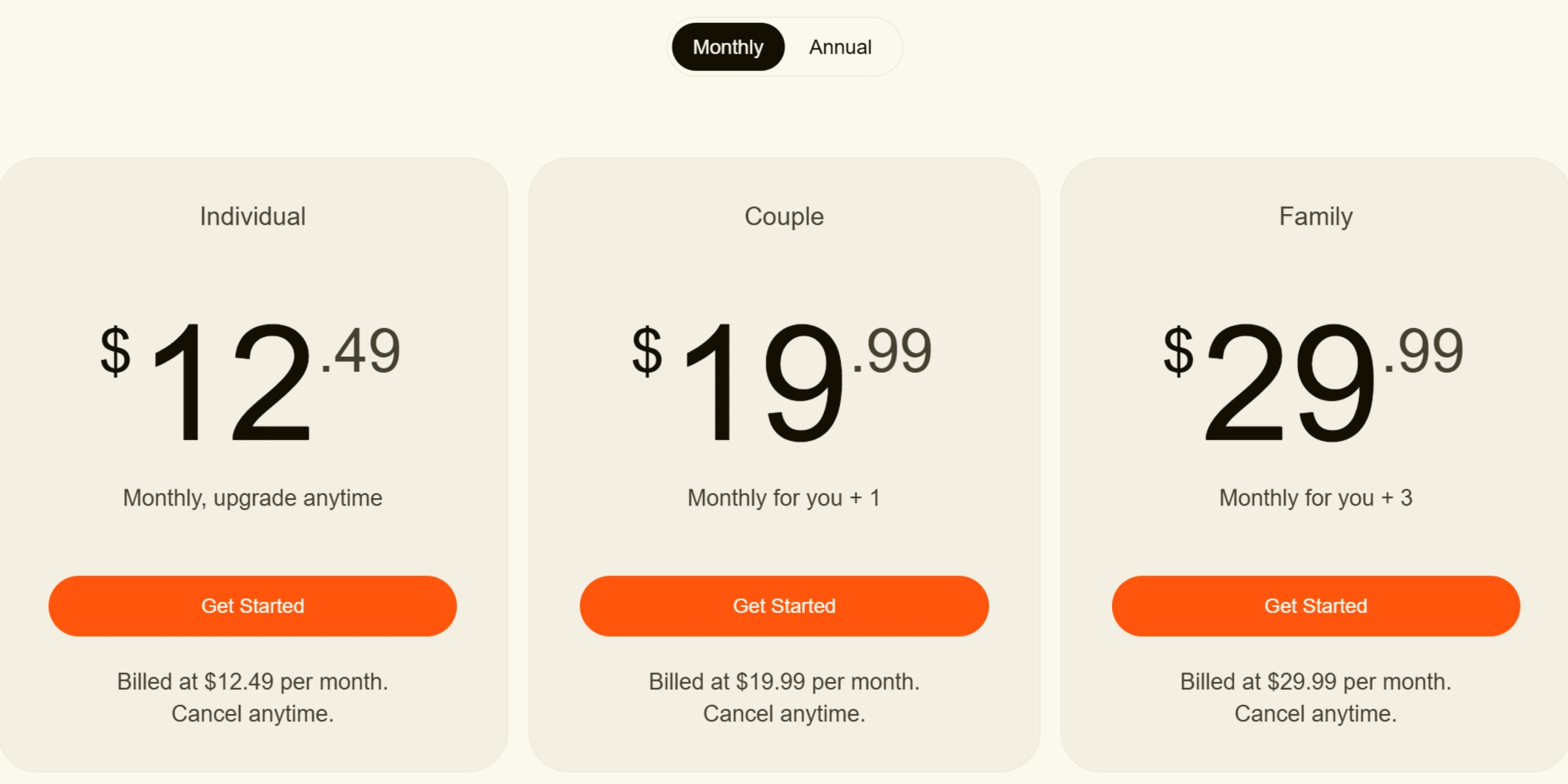
There is no permanent free plan. The current plan page lists monthly and annual subscriptions:
- Individual (1 user): $12.49/month, or $9.99/month billed annually ($119.99/year)
- Couple (2 users): $19.99/month, or $14.99/month billed annually ($174.99/year)
- Family (4 users): $29.99/month, or $24.99/month billed annually ($299.99/year)
The same core feature list is shown across Individual, Couple, and Family plans; the main difference is the number of people covered. Privacy Bee takes a different approach, with wider remediation and analyst support reserved for higher tiers, as explained in the Incogni vs Privacy Bee comparison.
But $119.99 per year for an individual is not cheap. Incogni Standard is $15.98 month to month or $95.88 when billed annually for dedicated broker removal. SimpleLogin Premium is about $36 per year, while Bitwarden Premium is $19.80 per year. A specialist stack costs more once several subscriptions are combined, so the real question is whether Cloaked's single account is worth the trade-offs.
Email and phone aliases: the core buying reason
Cloaked's public product flow creates a unique email address and phone number for an identity, then routes messages through the app or forwarding controls. The point is compartmentalization: one exposed alias can be disabled without changing the contact details used everywhere else.
Unlimited aliases on every plan. No caps.
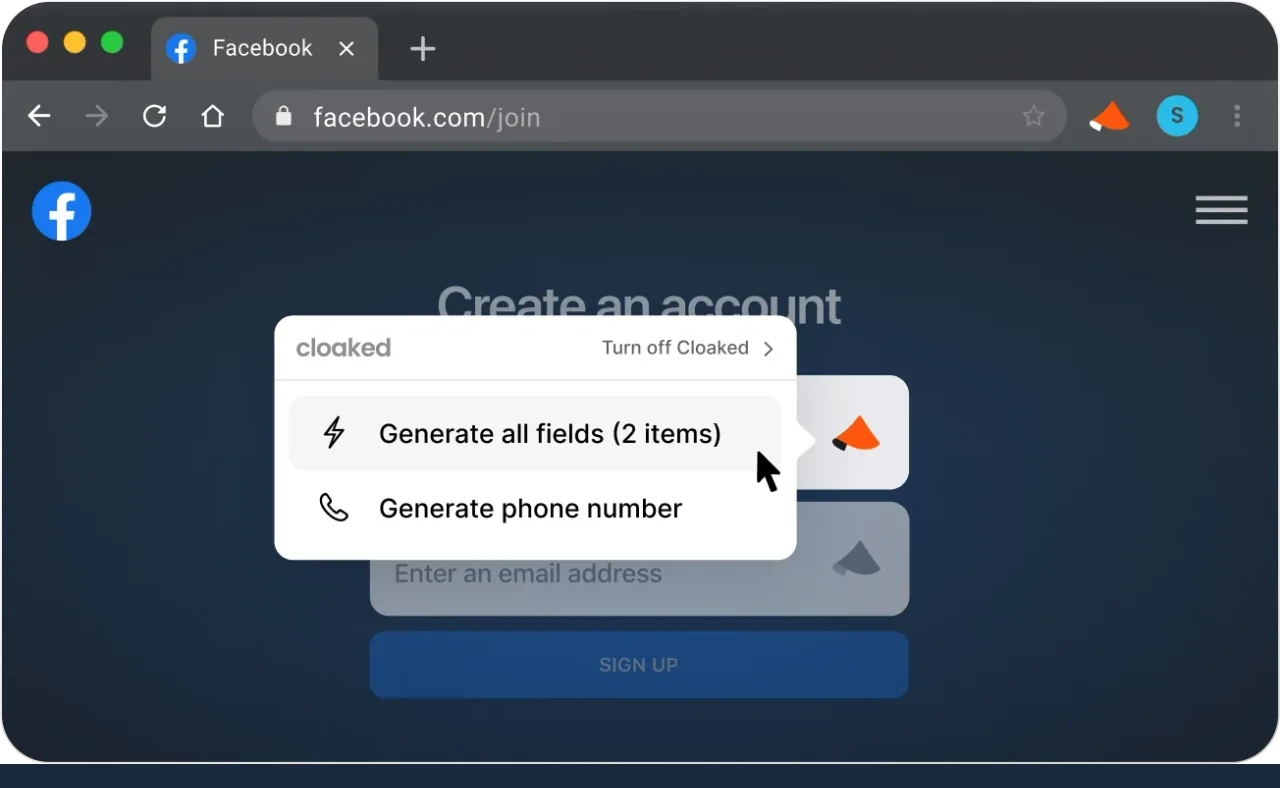
The important caveat is phone-number acceptance. Standard aliases use VoIP, while Cloaked documents an optional carrier-backed eSIM for stricter services. The company says eSIM numbers are more likely to be accepted by banks and insurers, not guaranteed to work with every verification system.
The VoIP verification limit
Cloaked's help center says some services reject its standard VoIP numbers, including platforms with stricter fraud controls. That means a masked number can be useful for ordinary signups without being a reliable replacement for the real number on every financial or identity-sensitive account.
This isn't a Cloaked bug. It's an industry-wide VoIP detection problem. Google Voice has the same issue. But Cloaked markets phone masking as a core feature without clearly flagging this limitation on their sales page.
The eSIM option reduces that limitation but does not remove the need to verify a specific bank or service. If number acceptance is central to the purchase, start month to month and test the exact accounts you intend to protect before moving to annual billing.
Also worth stating plainly: Cloaked numbers cannot dial 911. If you're using a Cloaked number as your primary contact, make sure you have another way to reach emergency services.
Data removal: the coverage label needs context
Cloaked's current plan page advertises removal from 1,000+ sites. Current and recent official articles also use smaller 130+ and 300+ broker-site figures. Those labels can describe different sets of people-search sites, affiliates, and broader removal targets, so they should not be treated as one audited broker count.
Incogni's 420+ figure is easier to interpret because Deloitte's limited-assurance report defines the covered data-broker scope and recurring request cadence. DeleteMe publishes a large named list. If removal is the primary job, our data broker removal services roundup compares those proof models instead of ranking vendors by the largest headline number.
Removal timelines and re-listing behavior vary by site. If this is your primary goal, compare Cloaked's bundled scope with Incogni Standard at $15.98 monthly or $95.88 annually and DeleteMe Solo at about $129 per year.
What Cloaked offers that those tools don't: the broker removal is bundled with everything else. One subscription, one dashboard. For people who want "good enough" broker coverage combined with aliases and insurance, the convenience argument holds up.
Security: the audit trail is solid
Cloaked's public security documentation lists:
- ECC25519 for key exchange
- Xsalsa20-Poly1305 for authenticated encryption
- Argon2 for password hashing
- Zero-knowledge architecture: Cloaked can't access your stored data
- Per-user isolated databases with unique encryption keys
And the certifications back it up: SOC 2 Type II (completed), ISO 27001, ISO 27701, and PCI-DSS v4.0.1. That's a more complete compliance stack than most competitors in this space can show.
One limitation that's inherent to how aliases work: email and SMS forwarding can't be fully end-to-end encrypted. Your messages are encrypted at rest on Cloaked's servers and encrypted in transit, but the forwarding step means Cloaked's infrastructure processes the content. This is a protocol limitation, not a design flaw. But if you need true E2EE email, Proton Mail or Tuta are the answer, not an alias service.
The $1M insurance policy: real, but narrow
Underwritten by AIG. Covers up to $1 million in reimbursement for identity theft losses: legal fees, lost wages, dependent care costs. Includes 24/7 access to human resolution specialists who'll contact banks, freeze reports, and work through the recovery process with you.
Sounds great. Here's the fine print:
- US residents only
- Available only to eligible paid subscribers
- It's a reimbursement policy, not a payout. You prove losses first, then get compensated
- Cannot be purchased separately from the Cloaked subscription
For most people, the insurance is a safety net you'll probably never use. But if you do experience identity theft, having AIG-backed coverage and a dedicated resolution team is genuinely valuable. Most data removal tools don't include anything like this.
Password manager, monitoring, VPN, and payments
Cloaked includes password generation, autofill, authentication-code storage, and encrypted custom fields. Buyers who depend on mature sharing, recovery, hardware-key, or enterprise controls should still compare a dedicated password manager before consolidating.
Dark web and SSN monitoring add exposure alerts, but Cloaked's terms state that monitoring cannot identify every instance and does not remove information from the dark web. Treat alerts as a signal to secure affected accounts, not as cleanup.
The current plan page lists Cloaked VPN as included, while Cloaked Pay remains invite-only and AI Defense is marked coming soon. Evaluate the subscription on features available to your account now, not on waitlisted or announced additions.
Where you can actually use it
Cloaked provides mobile, browser, and web workflows, but extension support and feature parity can change. Check the current download page against the browsers and devices you actually use before consolidating around the bundle. Our privacy browser guide covers the surrounding browser decision.
Bundles unlimited aliases, data removal, monitoring, VPN access, and up to $1M in eligible identity-theft reimbursement in one subscription.
Anyone whose primary need is independently evidenced data-broker removal rather than an all-in-one privacy bundle.
- Unlimited email and standard phone aliases across the listed plans
- Optional carrier-backed eSIM for services that reject VoIP numbers
- Publishes SOC 2 Type II, ISO 27001, ISO 27701, and PCI-DSS v4.0.1 credentials
- $1M AIG-underwritten identity theft insurance with human resolution specialists
- Zero-knowledge encryption — Cloaked can't access your stored data
- Standard VoIP aliases rejected by many banks and financial services
- Vendor uses different site and broker counts across current official pages
- No permanent free tier; annual Individual billing is $119.99
- Browser and device compatibility should be checked before consolidating
- Cloaked Pay is invite-only and AI Defense is still marked coming soon
Cloaked vs the alternatives
The real question isn't whether Cloaked works. It does. The question is whether one bundled app beats dedicated tools at each job.
| Feature | Cloaked | Incogni | SimpleLogin | DIY Stack |
|---|---|---|---|---|
| Email Aliases | Unlimited | ✗ | Unlimited (paid) | SimpleLogin (~$36/yr) |
| Phone Aliases | Unlimited (VoIP + eSIM) | ✗ | ✗ | Google Voice (free) |
| Data Broker Removal | 1,000+ sites on plan page; scope varies | 420+ brokers (Deloitte limited assurance) | ✗ | Incogni ($95.88/yr Standard) |
| Password Manager | Included | ✗ | ✗ | Bitwarden ($19.80/yr) |
| Dark Web Monitoring | ✓ | ✗ | ✗ | HIBP (free) |
| Identity Theft Insurance | $1M (AIG) | ✗ | ✗ | ✗ |
| VPN | Included | ✗ (Surfshark separate) | ✗ (Proton VPN separate) | Separate ($40-100/yr) |
| Virtual Cards | Invite only | ✗ | ✗ | Privacy.com (free tier) |
| Public Assurance / Certifications | SOC 2 Type II + ISO 27001/27701 | Deloitte ISAE 3000 limited assurance | Open source | Varies by tool |
| Price (Annual) | $119.99 | $95.88 Standard | About $36 | ~$152 + VPN |
| Action | Try Cloaked → | Try Incogni → | Try SimpleLogin → | Visit site |
The DIY stack costs more before a VPN but gives each job to a specialist and makes Incogni's 420+ assured broker scope easier to interpret. What you lose is the insurance benefit, one-account convenience, and Cloaked's integrated phone-alias workflow.
If managing four separate accounts sounds exhausting, Cloaked's bundle has a clear convenience case. The specialist approach offers more control and clearer per-category evaluation, but also more billing and setup work.
Who Cloaked is for (and who should skip it)
Good fit: People who create many online accounts and want separate email or phone identities without managing several privacy subscriptions. The bundle is most defensible when aliases are used often and the U.S.-limited insurance benefit is relevant.
Not a good fit: Buyers whose only goal is data removal and who want a clearly defined, independently assured broker scope. Buyers outside the U.S. and Canada should also confirm availability and insurance limitations before paying.
If Cloaked Pay or AI Defense is the deciding feature, wait until the capability is available to your account. The current subscription should stand on its released aliases, removal, monitoring, VPN, password, and call-screening tools.
Final verdict
Cloaked is trying to be the privacy equivalent of a Swiss Army knife. Its value comes from putting several jobs behind one account, not from proving that each component beats a specialist. The virtual-card feature is still invite-only, and the advertised removal scope needs more context than the headline site count provides.
The bundle can still be valuable for someone who wants unlimited aliases, monitoring, VPN access, data removal, password storage, and insurance eligibility without managing a half-dozen subscriptions.
The March 2026 financing gives Cloaked room to keep building, while the published SOC 2 and ISO credentials provide a more useful trust signal than funding alone. Neither point guarantees product fit or future support.
Go in with realistic expectations. Start with monthly billing if number acceptance or device compatibility is uncertain, test the exact accounts you plan to mask, and review current refund terms before moving to annual billing.
If you're building a broader privacy setup, pair this with Proton VPN or another option from our solid VPN roundup, plus a proper authenticator app for your most important accounts. No single tool protects everything.
Frequently Asked Questions
Ready to check Cloaked?
Use the verified route if the trade-offs still fit. If not, jump back to the summary and compare the alternatives.
Security and privacy editor focused on evidence-led buying guides. Reads official documentation, audit notes, privacy policies, recovery limits, and support pages before turning security claims into practical recommendations.
Sarah starts by locating the evidence boundary, then ranks security and privacy tools by audit and policy scope, recovery design, trust boundaries, residual risk, and what a cautious buyer can verify.
Related Articles

Venice AI vs Proton Lumo vs Duck.ai: Which Private AI Chat Fits?
Private AI chat decision guide
Venice AI, Proton Lumo, and Duck.ai compared by privacy architecture, saved-history protection, provider exposure, plan limits, model access, and price.
Malwarebytes vs Bitdefender vs Norton
Paid antivirus decision guide
Malwarebytes, Bitdefender, Norton, and Microsoft Defender compared by paid antivirus value, real-time protection, renewal risk, bundle scope, and lab evidence.