
NordVPN vs Surfshark looks like a normal VPN comparison until you price the household.
My default pick is NordVPN if you want the stronger security bundle and are willing to manage renewal pricing. Surfshark is the better value pick when the real problem is covering every phone, laptop, tablet, browser extension, and shared household device under one subscription.
Do not buy either one because a review says it is the fastest VPN. I did not run speed tests for this page. I checked official pricing, renewal pages, no-logs assurance claims, public competitor pages, GDT operator data, Search Console demand, and active commercial routes. I did not create accounts, install apps, connect to servers, test streaming, run DNS leak checks, or cancel a plan.
If you are still choosing the broader category, start with our best VPNs roundup. If NordVPN is already on your shortlist, the dedicated NordVPN review walks through renewal risk, ten-device coverage, and Threat Protection scope. If you want a stricter privacy alternative, read the ProtonVPN vs NordVPN breakdown. If your privacy stack starts in the browser, pair this decision with our privacy browsers guide.
-
#1 NordVPNBest default for a stronger security bundle, latest no-logs assurance, Meshnet, and broader Nord extras
-
#2 SurfsharkBest value for families and device-heavy homes: lower first-term price and unlimited devices
If I were choosing for one person today, I would start with NordVPN and set a renewal reminder on day one. For a family or shared home, I would price Surfshark first because unlimited devices changes the math.
The real decision is renewal plus device fit
The official NordVPN pricing page localized to EUR in the July 30 check. The 2-year offers showed Basic at €3.49 per month (€94.23 for the first 27 months), Complete at €4.49 per month (€121.23), and Ultimate Max at €8.49 per month (€229.23). The same page showed annual renewal references of €139.08 for Basic, €219.48 for Complete, and €338.28 for Ultimate Max.
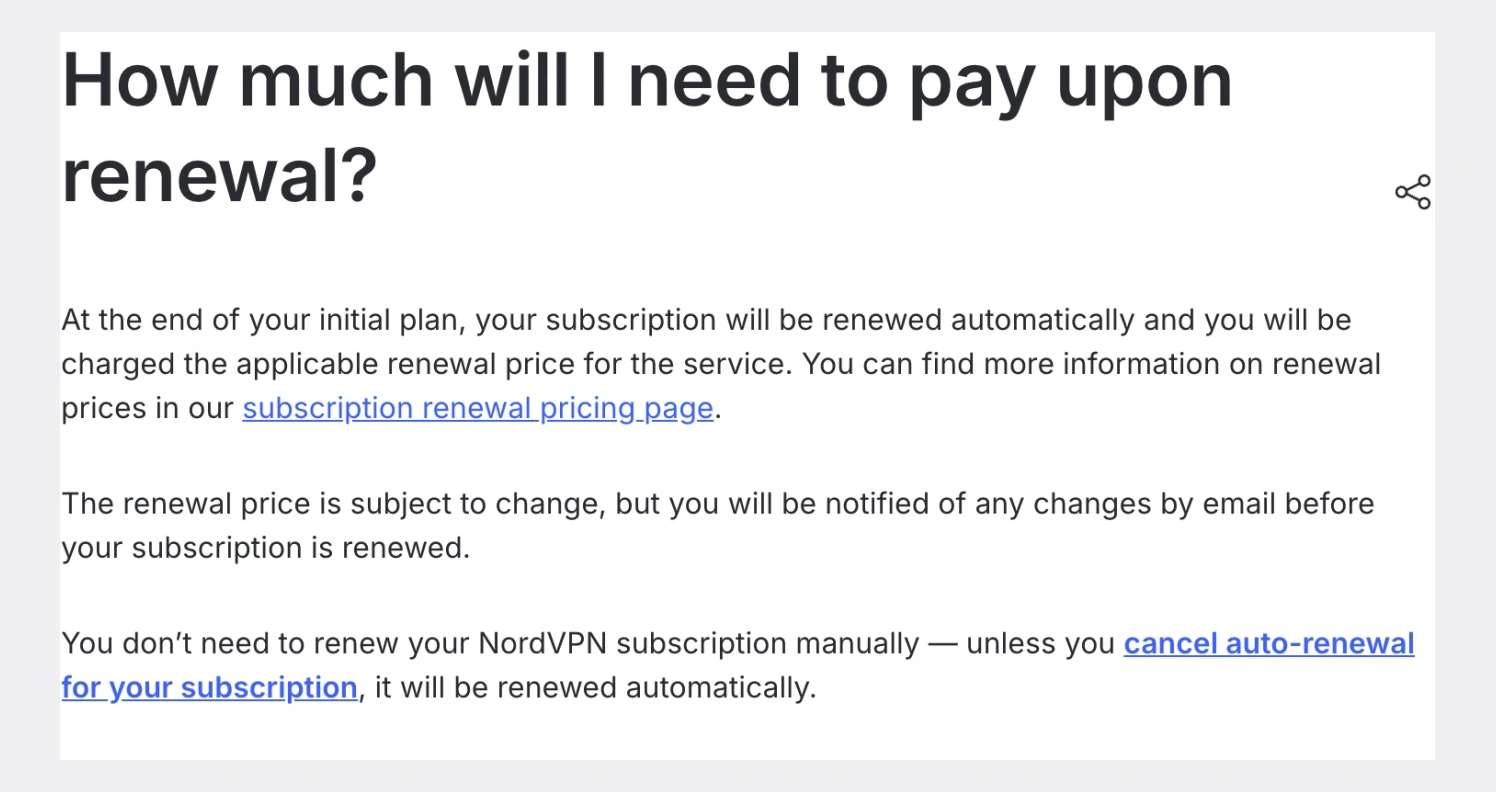
That is the part to remember. NordVPN's support page says the subscription renews automatically at the applicable renewal price unless auto-renewal is canceled, and that renewal pricing can change before renewal.
Surfshark's official pricing page also localized to EUR in the July 30 check. The 2-year offers showed Starter at €2.49 per month (€67.23 for the first 27 months), One at €2.79 per month (€75.33), and One+ at €4.49 per month (€121.23). VAT may apply, and the later renewal amount should be checked before payment.
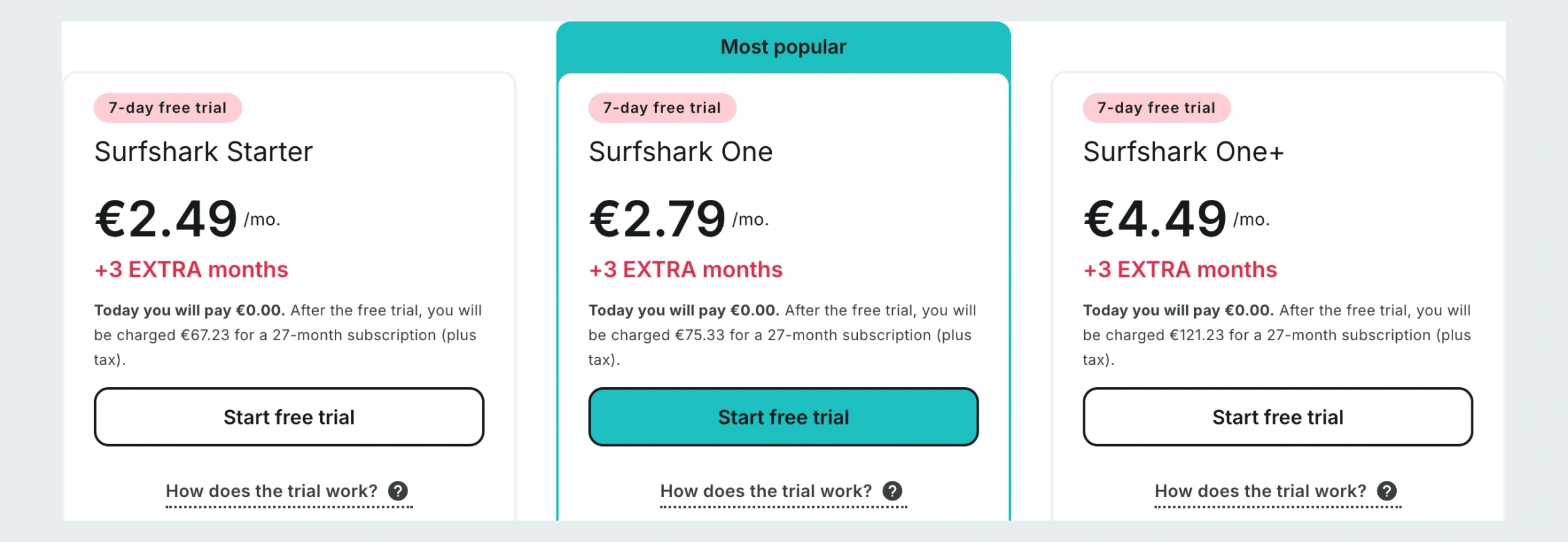
Both pages make the first term easier to see than the later bill. NordVPN's support page says auto-renewal uses the applicable renewal price and that the price can change after notice. Surfshark's checkout amount is localized and may include VAT. Treat the promotional period as a dated contract decision, not a permanent monthly rate.
NordVPN vs Surfshark comparison
| Feature | NordVPN | Surfshark |
|---|---|---|
| Best job | Security bundle with stronger extras | Low-cost family and device-heavy coverage |
| Starting price observed | Basic 2-year EUR offer showed €3.49/mo for first 27 months | Starter 2-year page showed €2.49/mo for first 27 months |
| Renewal caveat | Auto-renewal support page points to applicable renewal pricing | First-term price is localized; VAT and later renewal amount require checkout review |
| Device fit | Better for smaller device sets where extras matter more than unlimited coverage | Unlimited devices shown across the VPN feature table |
| Trust proof | Sixth independent no-logs assurance announced Feb 2026 | No-logs page says Deloitte assured the policy in 2023 and 2025 |
| Security extras | Meshnet, Threat Protection Pro, Double VPN, Onion Over VPN, broader Nord suite | CleanWeb, Dynamic MultiHop, Rotating IP, Alternative ID, Surfshark One bundle |
| Skip if | You only need cheap coverage for many household devices | You want Nord-specific tools or the longer no-logs assurance trail |
| Action | Check NordVPN | Check Surfshark |
How I scored the decision
The score uses five criteria: Trust Proof, Billing Clarity, Device Fit, Security Extras, and Buyer Fit. Trust Proof asks what can be checked publicly. Billing Clarity asks whether the renewal is understandable. Device Fit asks whether the plan covers the actual home. Security Extras asks whether the subscription includes useful protection beyond a tunnel. Buyer Fit asks which product solves the keyword's likely job.
This is why NordVPN wins the default recommendation but not by much. The security bundle and current no-logs assurance trail are stronger. Surfshark makes the cheaper, cleaner case for families, roommates, and device-heavy homes.
What most NordVPN vs Surfshark pages miss
The trap in this SERP is speed certainty. A comparison page runs one test set, crowns a winner, and the reader walks away thinking the question is solved. That is too thin for a VPN purchase. Speed varies by protocol, server load, country, peering route, time of day, device, and whether the local network is already bad. If a page claims a permanent speed winner without showing the exact test setup, it is mostly selling confidence.
That is the wrong question.
The real decision is slower and more annoying. What bill will renew? How many devices need coverage? Are you paying for a security suite or just a VPN tunnel? Does the company publish current assurance material, or only a privacy slogan? Are you comfortable with NordVPN and Surfshark being related brands after the 2022 merger, or do you need corporate diversification?
That is why this page treats speed as a reason to do direct VPN testing later, not as a claim to borrow from someone else. A VPN comparison without local tests should be honest about what it can still do well: verify official pricing, name renewal risks, compare device fit, explain trust proof, and tell the wrong person to stop before the checkout page.
1. NordVPN: the stronger security bundle
NordVPN is the safer default if your VPN is part of a broader security setup, not just a cheap IP-masking subscription. The February 2026 no-logs announcement says Deloitte Lithuania completed the sixth independent assurance engagement, reviewing systems and supporting operations against NordVPN's no-logs statement.
The better reason to choose NordVPN is the bundle. Meshnet, Threat Protection Pro, Double VPN, Onion Over VPN, dedicated IP options, password/storage upsells, and the wider Nord ecosystem all make it feel like the more mature security purchase. Some of those extras will be useless to a typical subscriber. But if even two of them matter, NordVPN becomes easier to justify.
The reason I hesitate is billing. NordVPN is not hiding that renewal exists, but the cheap entry price is still the part that gets attention. If you buy NordVPN, treat the first-term price as a trial period with a calendar reminder. Do not let the renewal decide for you while you are asleep.
The wrong NordVPN buyer is the person who only wants the cheapest private Wi-Fi cover for a home full of devices. NordVPN can do that job, but it is not the cleanest economic answer to that job. You are paying for a brand and a bundle. If Meshnet, Threat Protection Pro, Double VPN, or Nord's wider security ecosystem are not part of the reason, the recommendation weakens fast.
NordVPN has the stronger security-bundle story: a fresh no-logs assurance announcement, Meshnet, Threat Protection Pro, Double VPN, Onion Over VPN, and the wider Nord suite.
Families or shared homes that mainly need the lowest first-term cost and unlimited device coverage.
NordVPN ranks first because trust proof and security extras matter more for the default reader than raw device count. The accepted tradeoff is renewal vigilance.
- Fresh February 2026 no-logs assurance announcement from NordVPN
- Stronger security bundle if Meshnet, Threat Protection Pro, Double VPN, or Onion Over VPN matter
- Clearer fit for solo users, remote workers, and people buying more than a basic tunnel
- Wider Nord ecosystem can replace separate password, storage, and identity add-ons for some households
- Promotional pricing makes the renewal reminder mandatory
- Not the cheaper household-device answer if you need to cover many phones, laptops, and tablets
- More upsell surface than someone who only wants a simple VPN may want
- The Ultimate Max bundle can be excessive when all you need is a VPN tunnel
2. Surfshark: the cleaner family value pick
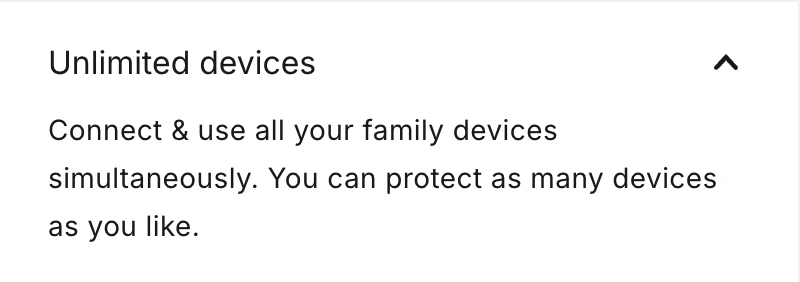
Surfshark is the more practical pick when device count is the actual problem. Its pricing feature table showed unlimited devices across the VPN row. That changes the conversation for families, shared homes, and people who want the VPN on every phone, tablet, browser, TV stick, and laptop without counting seats.
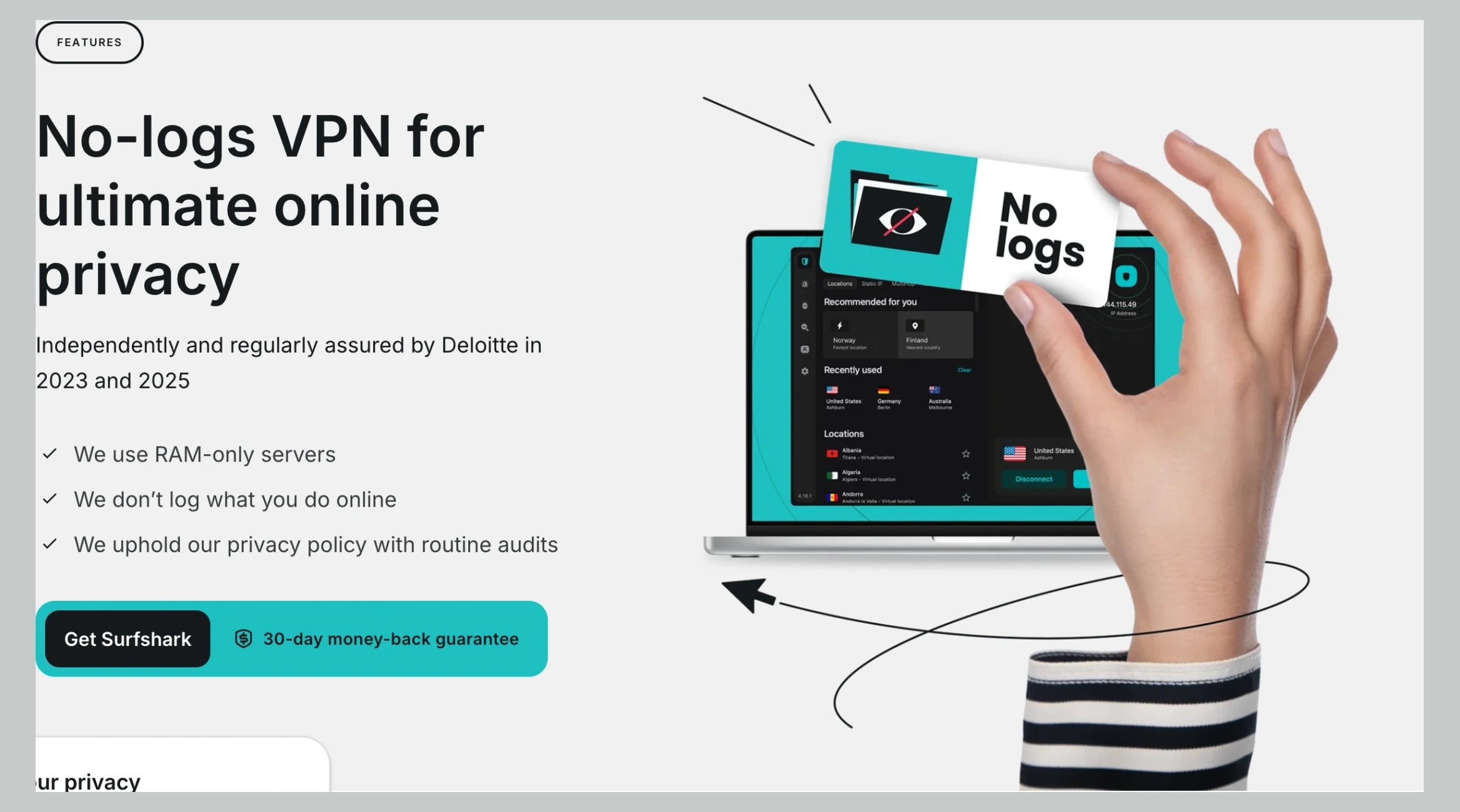
The no-logs proof is also stronger than cheap-VPN stereotypes suggest. Surfshark's no-logs page says the policy was independently and regularly assured by Deloitte in 2023 and 2025, and the page emphasizes RAM-only servers, no activity logs, and routine audits.
The tradeoff is that Surfshark feels more like a value bundle than the heavyweight security default. CleanWeb, Dynamic MultiHop, Rotating IP, Alternative ID, Alert, Search, Antivirus, and Incogni-style data removal all matter to the right household. But if you are comparing it straight against NordVPN, the strongest reason to pick Surfshark is still simpler: it is cheaper in the observed first term and easier to stretch across a home.
The wrong Surfshark buyer is the person who sees the low first-term price and starts adding bundle value to justify the purchase. Surfshark One and One+ can make sense, but only if Alert, Search, Antivirus, and data removal are jobs you would have bought anyway. If those extras are just padding around a cheap VPN, the bill is cleaner when you stay closer to Starter and keep the rest of the privacy stack separate.
Surfshark makes the better household math argument: a lower observed first-term Starter price and unlimited device coverage across the VPN feature table.
People who want NordVPN-specific features, a stronger security-suite center of gravity, or the longer public no-logs assurance trail.
Surfshark ranks close behind because device fit and first-term value are excellent. It loses the default slot because NordVPN has stronger security-bundle gravity for this comparison.
- Best fit here for families, roommates, and device-heavy homes
- Official pricing page showed Starter at €2.49/mo for the first 27 months before VAT where applicable
- Unlimited devices are shown across the VPN feature table
- Official no-logs page states Deloitte assurance in 2023 and 2025
- Security-bundle story is less compelling than NordVPN if Meshnet and Nord extras matter
- Lower first-term price still becomes a standard renewal later
- The One and One+ bundle can push people into adjacent products they may not need
- Broad bundle marketing can make a simple VPN purchase harder to keep simple
3. Independent privacy alternatives: when both are the wrong shortlist
There is a third answer that deserves space even though this page is not a Proton VPN or Mullvad comparison: sometimes NordVPN and Surfshark are the wrong shortlist.
If your threat model is basic public Wi-Fi privacy, ISP shielding, travel browsing, and device coverage, this comparison is enough to choose a mainstream VPN. If your threat model includes journalism, activism, sensitive crypto operations, source protection, aggressive state surveillance, or corporate diversification, do not stop at two related mainstream brands.
That is the hard privacy tradeoff. NordVPN and Surfshark are convenient, heavily marketed, and commercially polished. That can be good for normal users because the apps are approachable and the feature set is broad. It can be bad for privacy-focused people who want a narrower philosophy, less marketing gravity, a different corporate structure, open-source posture, anonymous payment paths, or fewer bundled upsells.
For that threat model, the next step is not "which Nord-family brand has a better discount?" The next step is comparing Proton VPN, Mullvad, IVPN, or another independent provider against the exact job. Proton's value is the privacy ecosystem and stronger fit for some power users. Mullvad's value is the account-number model and flat pricing philosophy. IVPN's value is a smaller, privacy-focused posture. Those alternatives may lose for streaming, device count, or mainstream polish. But they answer a different fear.
This matters because the wrong VPN choice is rarely catastrophic for a normal subscriber. It is usually boring and expensive: renewal shock, unused bundle features, not enough devices, or a product that solves yesterday's problem. For a harder privacy case, the wrong choice can be a structural mismatch. Do not make a structural decision from a discount banner.
Four buyer scenarios
Solo remote worker: Pick NordVPN if Meshnet, Threat Protection Pro, and the stronger no-logs assurance trail matter. The failure to avoid is underbuying the security layer and then bolting on extra tools later. The billing risk is renewal, so set the reminder immediately.
Family or shared apartment: Start with Surfshark. The failure to avoid is paying for multiple subscriptions because the plan cannot cover every device. Unlimited devices are the reason Surfshark exists in this comparison. Do not upgrade to One+ unless the extra identity and data-removal pieces are real jobs.
Privacy power user: Treat both as mainstream convenience options, not the whole shortlist. The failure to avoid is confusing polished consumer security with a privacy posture that matches your threat model. Add Proton VPN, Mullvad, or IVPN before deciding.
Deal hunter: Slow down. The failure to avoid is buying the cheapest 24-month price and ignoring renewal, taxes, currency, and cancellation friction. A VPN that saves a few euros this month but renews into a plan you forget to cancel is not cheap. It is just delayed billing.
The same-parent note matters
NordVPN and Surfshark are not totally independent alternatives in the way Proton VPN and Mullvad are. Surfshark announced in 2022 that it was joining forces with Nord Security. The same announcement said the companies would continue operating autonomously with separate infrastructures and different product development plans.
That does not make the comparison fake. It does make the threat-model question cleaner. If your concern is "which related brand fits my budget and workflow better," this page helps. If your concern is corporate diversification, add Proton VPN, Mullvad, IVPN, or another non-Nord-family provider to the shortlist before you pay.
Verdict: choose the failure you are avoiding
Pick NordVPN if your failure mode is underbuying security. You want the stronger trust trail, more mature extras, Meshnet, Threat Protection Pro, and a broader privacy/security suite. Then put the renewal date in your calendar.
Pick Surfshark if your failure mode is paying too much for device coverage. You want one subscription across a home, a lower observed first-term price, and enough privacy features without turning the purchase into a full security-suite decision.
Skip both as the final answer if you are a journalist, activist, crypto operator, or power user with a harder privacy model. In that case, read the VPN roundup again and compare Proton VPN and Mullvad before buying the most marketed brand.
The boring recommendation is the honest one: buy the tool that removes your specific failure, then put the renewal date somewhere you will actually see it. NordVPN removes the "I need stronger security extras" failure better. Surfshark removes the "I have too many devices for this bill" failure better. Independent providers remove the "I do not want this corporate family as my full privacy bet" failure better.
Frequently Asked Questions
Ready to check NordVPN?
Use the verified route if the trade-offs still fit. If not, jump back to the summary and compare the alternatives.
Security and privacy editor focused on evidence-led buying guides. Reads official documentation, audit notes, privacy policies, recovery limits, and support pages before turning security claims into practical recommendations.
Sarah starts by locating the evidence boundary, then ranks security and privacy tools by audit and policy scope, recovery design, trust boundaries, residual risk, and what a cautious buyer can verify.
Related Articles

Cloaked vs Incogni: Do You Need Both?
Decide whether existing broker cleanup, future sign-up aliases, or a documented gap justifies one privacy subscription or both
Cloaked vs Incogni compared by aliases, broker removal, verified annual prices, and the extra value of paying for one service or both.
Backblaze vs IDrive: Choose by What You Need to Recover
For one active Mac or Windows PC with a growing file collection; choose IDrive for several personal computers or retained locally deleted files
Backblaze vs IDrive compared by deleted-file retention, device limits, private keys and current annual prices. Choose backup for the recovery you need.