

California DROP changes the data-removal question. The old question was "which paid broker removal service should I buy?" The better question now is narrower: if a free state portal can send one deletion request to registered data brokers, what are you still paying DeleteMe, Incogni, Optery, or Kanary to do?
My default answer is simple. If you are a California resident, start with California DROP first. It is free, official, and designed for the exact broker-deletion job that paid services have been selling around for years. Then use a paid service only if you need coverage outside the state mechanism, visibility into your exposure, household workflows, custom removals, or someone to keep watching for reappearances.
This is not a hands-on removal test. I checked official California DROP pages, California data-broker obligation pages, paid-service pricing and coverage pages, rendered screenshots, Search Console/topic-audit signals, current SERP competitors, and recent public discussion. I did not submit a DROP request, enter personal data, open paid accounts, measure deletion outcomes, or test support and cancellation flows.
If you only want the paid-service shortlist, read our focused DeleteMe vs Incogni vs Optery comparison. If you are still learning the category, start with the broader data broker removal services guide. If your exposure has already turned into account takeover or credit-file risk, pair this with our identity theft protection guide and password manager picks.
-
#1 California DROPBest first step for eligible California residents: free state portal for registered data brokers
-
#2 OpteryBest paid next check: free exposure report before deciding whether recurring removal is worth it
-
#3 IncogniBest low-friction paid automation if you want recurring removals without managing reports
-
#4 DeleteMeBest premium U.S. coverage pick if its large public broker list and pricing fit your risk
If I were advising a California reader today, I would send them to California DROP first. Then I would tell them to run Optery's free exposure scan if they want proof of what is still visible. I would use Incogni for a set-and-monitor paid workflow, and DeleteMe when a U.S. buyer values a premium service and a large public broker list.
Why this decision changed now
California's official DROP page says the Delete Request and Opt-out Platform lets residents tell data brokers to delete and not sell their personal information. It also says DROP is free and that a single request can go to over 600 registered data brokers.
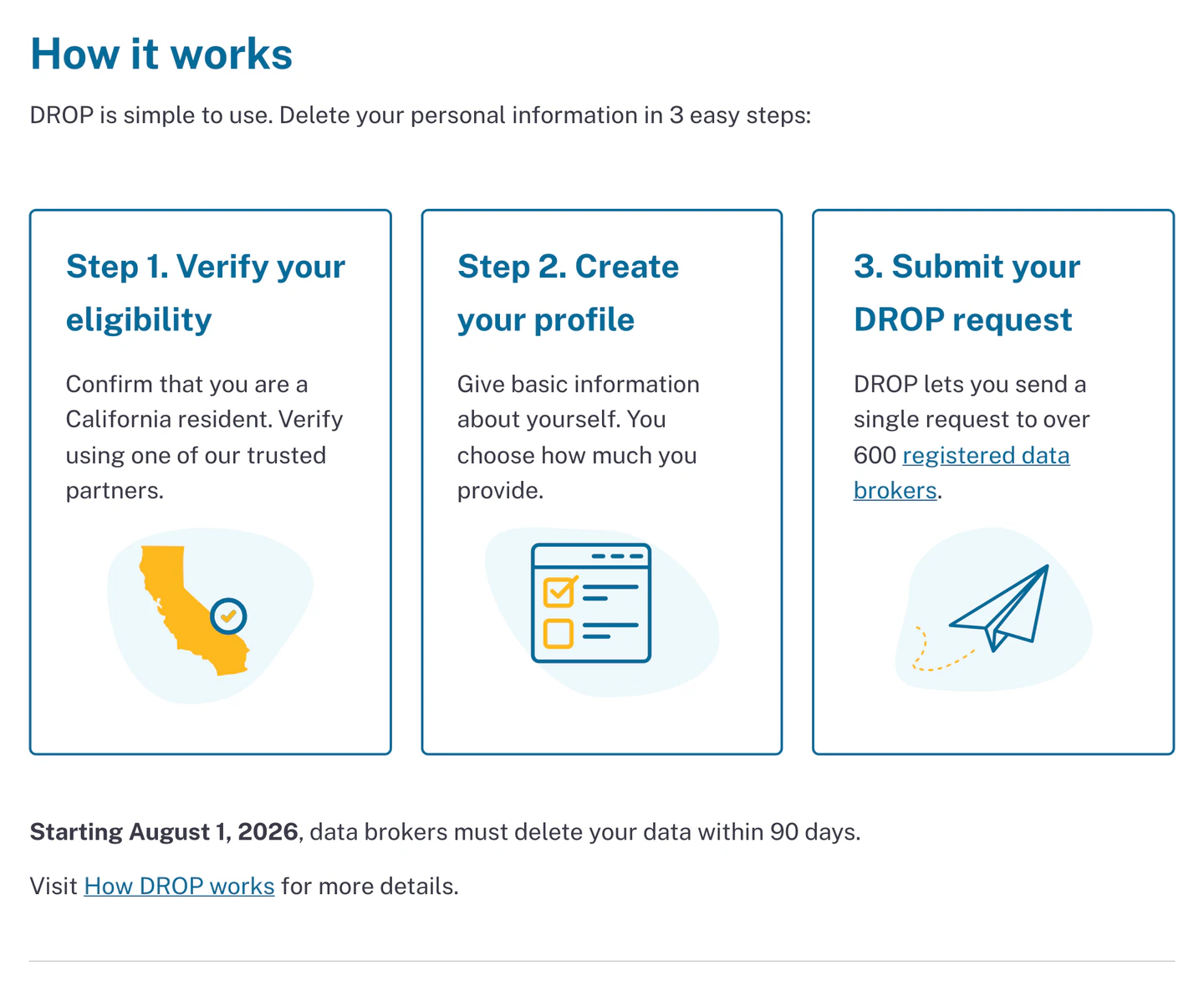
The timing matters. California says data brokers begin processing DROP requests on August 1, 2026, must delete covered data within 90 days, and then delete data on a 45-day cycle. That makes DROP more than an awareness page. It is becoming a recurring legal workflow for registered brokers.
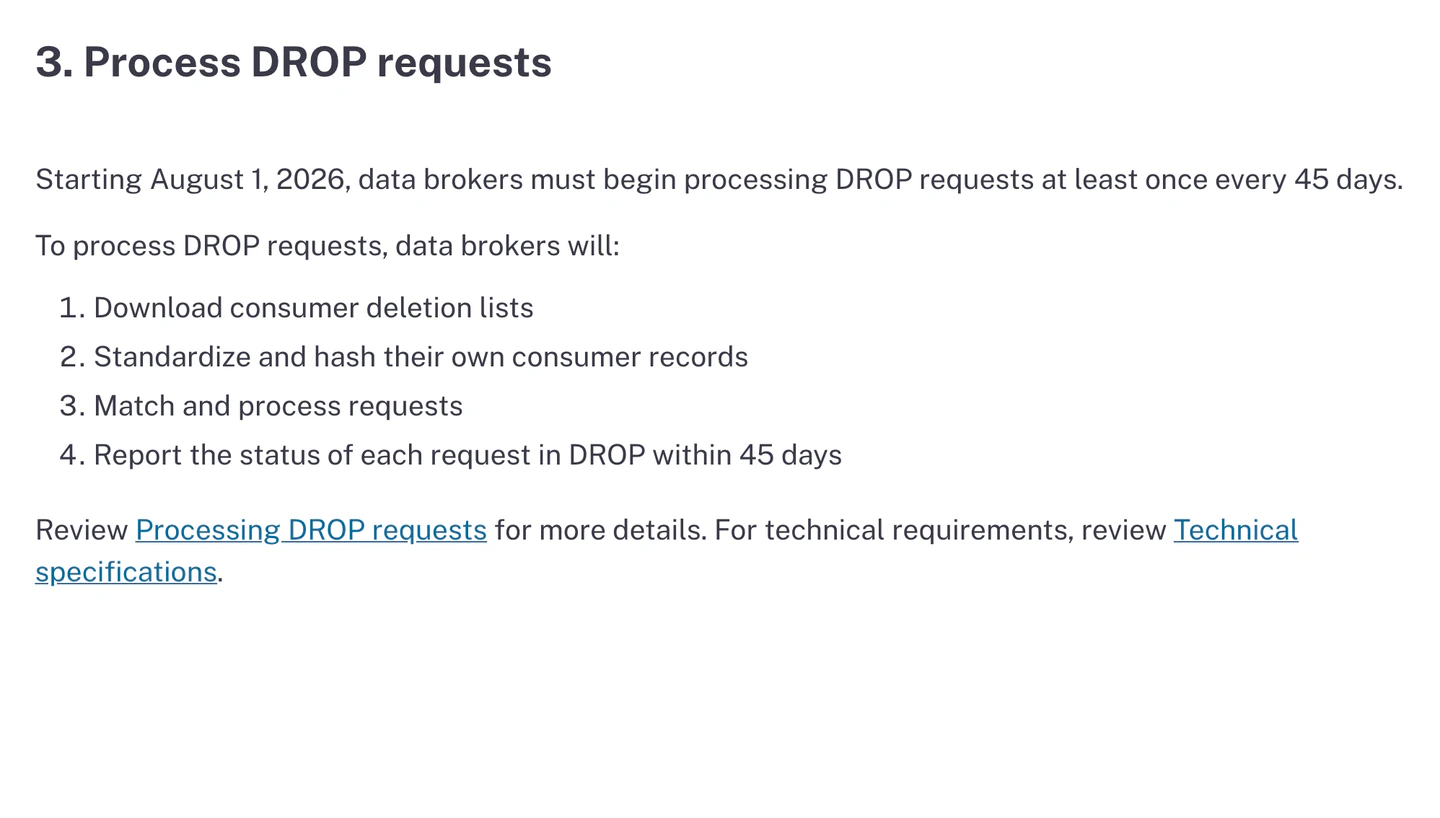
That does not kill the paid category. It splits it. A state portal can be the right first action and still leave paid services with a job: finding exposure, handling non-California scenarios, sending custom removals, managing family members, documenting progress, and watching for data that reappears.
Recent public interest supports the timing, but I am keeping it narrow. Reddit threads in r/California and r/privacy are asking about whether DROP has been submitted, when brokers actually start processing, and whether free self-serve deletion is enough. A May 20, 2026 arXiv paper on California data broker compliance also sharpened the point: broker friction and compliance gaps are not theoretical. I am not using those threads as sentiment. I am using them as proof that the buyer question is live.
Where DROP stops
The mistake would be treating DROP like a full privacy subscription. It is not that. It is a state deletion and opt-out platform aimed at registered data brokers. That is a big deal, but the boundary matters.
DROP does not tell you which people-search pages already expose your address. It does not grade your risk, build a family profile, or show before-and-after screenshots. It does not promise that every unregistered site, scraper, public record mirror, social profile, search result, or breach dump disappears. It also does not turn August 1, 2026 into an instant cleanup day. That date starts broker processing; the official timeline allows up to 90 days for deletion before the recurring 45-day cycle.
This is why a paid service can still be rational after the free step. You are not paying because DROP is useless. You are paying because the problem may be wider than the state mechanism: old addresses across people-search sites, relatives attached to your profile, Google results pointing to stale broker pages, custom removal targets, or a household that needs someone else to keep track of the work.
The clean buyer move is to refuse vague fear. Write down the gap before paying. "I want to know what is exposed" points to Optery. "I want low-maintenance recurring removal" points to Incogni. "I want premium U.S. service and a broad public broker list" points to DeleteMe. If you cannot name a gap, wait.
The real trap is buying a privacy subscription to calm a feeling instead of to solve a named exposure problem. A nervous buyer can stack services quickly: one account for a scan, one account for recurring removals, one premium account because the broker count looks bigger. That is how a free state request turns into billing clutter.
The hard part is not clicking a removal button. The hard part is knowing when enough is enough. If DROP covers the registered-broker request and a scan shows little meaningful exposure, the wrong buyer is the one who keeps paying anyway. If the scan shows old addresses, relatives, phone numbers, or search results that still create real risk, then the paid subscription has a job.
A practical buyer should also think about account risk. Every paid removal account needs personal identifiers to work. That can be reasonable, but it is still a trust handoff. The user is taking on billing, renewal, support, and data-handling risk in exchange for convenience. That tradeoff is fine when the remaining exposure is real. It is expensive noise when the problem was already handled by the free route.
How I ranked DROP and paid data removal
The cleanest way to avoid overbuying is to separate the jobs.
Use California DROP first if you are eligible, you mainly want registered data brokers to stop selling and delete your personal information, and you can tolerate the August 1 processing timeline. This is the lowest-cost first move.
Use Optery next if you want to see where your profile is still visible before you pay. A scan-first workflow matters because a lot of privacy buyers do not know whether the paid subscription solves their actual exposure or just their anxiety.
Use Incogni if you want recurring paid automation with clear annual pricing and do not want to manage a detailed report workflow. Incogni's strongest public proof is its recurring broker-removal pitch, 420+ broker scope, and cleaner default plan structure.
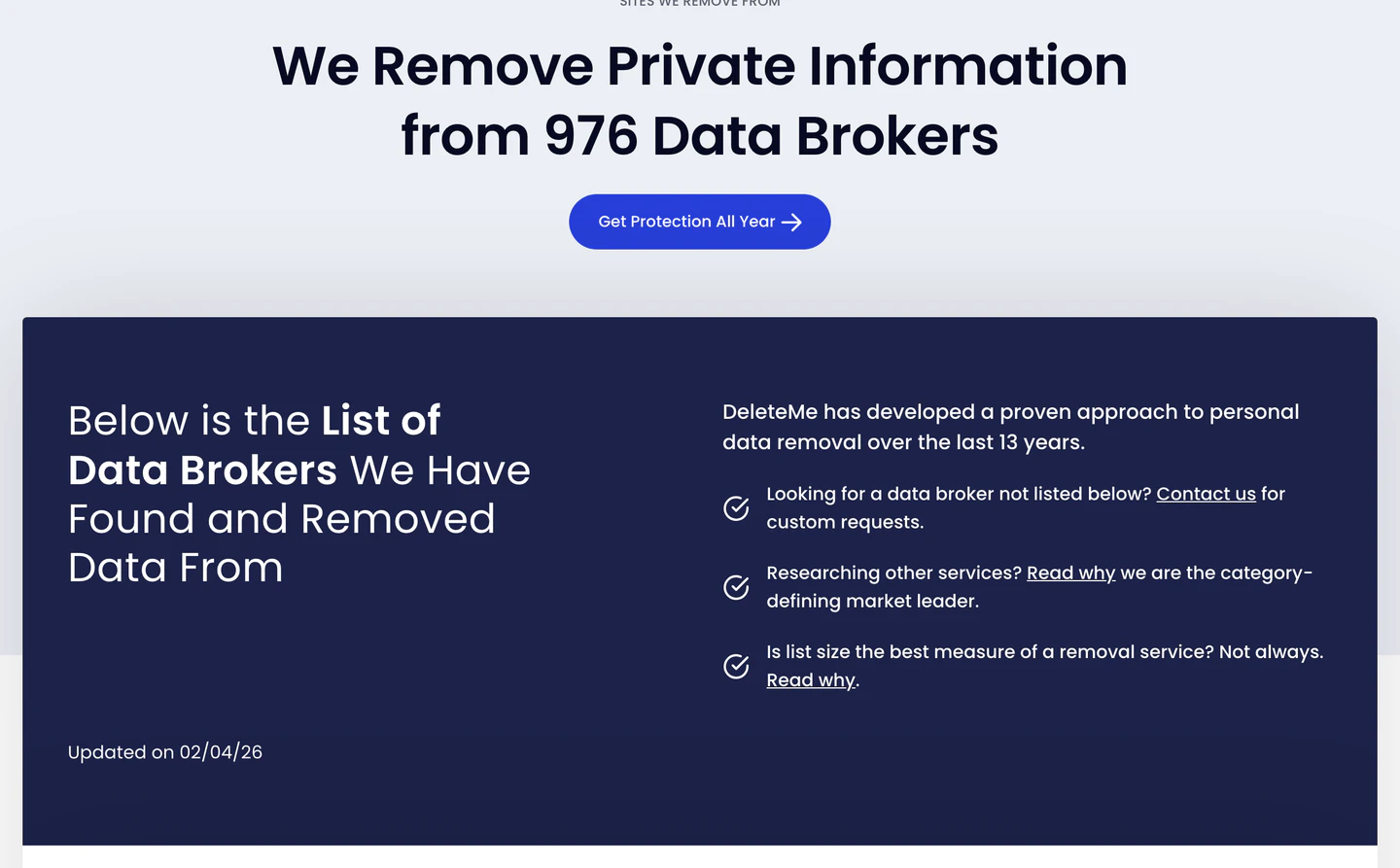
Use DeleteMe if you want a premium U.S. service, value its long operating history, and care about its public 976-broker coverage list. Just do not confuse a large list with proof that your exact records disappeared everywhere.
How to choose after DROP
Start with the cheapest reversible move. For a California resident, that means creating the DROP request before buying a data-removal subscription. Keep a private note with the date you submitted it, the email address you used, and any confirmation details. Do not paste sensitive identity data into random free-removal forms while you are doing this. Stick to official or known services.
Then decide whether you need visibility. If you want to know what is still indexed, run a scan-first tool. Optery is useful here because the free plan exists to answer the exposure question before billing starts. If the scan shows little that matters, stop. If it shows old addresses, relatives, phone numbers, or pages you would not want a stranger to find, you have a better reason to pay.
Only then pick the paid model. Incogni is the simpler automation path. DeleteMe is the premium U.S. service path. The worse version of this workflow is buying multiple subscriptions because data removal feels urgent. The better version is boring: free official request, exposure check, then one paid subscription only if the evidence says there is still a job to do.
| Feature | California DROP | Optery | Incogni | DeleteMe |
|---|---|---|---|---|
| Best use | First official request for eligible California residents | See exposure before paying | Low-friction paid recurring removal | Premium U.S. service with broad public broker list |
| Eligibility | California residents only | U.S. pricing page; broader country selector shown | Consumer paid service, location can affect pricing display | Rendered pricing flow stated U.S. residents only |
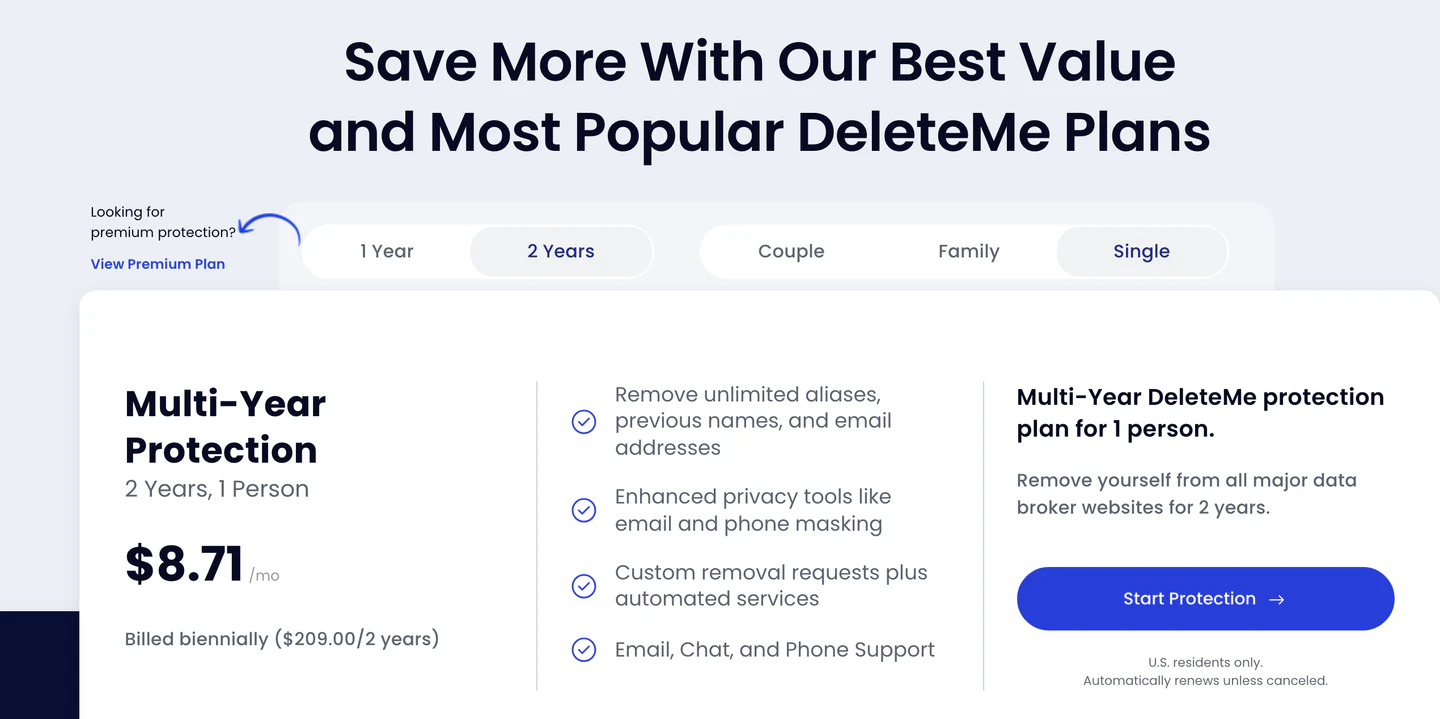
| Starting price checked | Free | Free Basic; Core $3.99/mo monthly or $39 yearly | $7.99/mo billed $95.88 yearly in official USD text | $8.71/mo billed $209 for 2 years in rendered U.S. flow |
| Coverage signal | Single request to over 600 registered data brokers | Paid tiers list 375+, 555+, and 630+ site coverage | 420+ broker sites, plus 3,000+ more sites on Unlimited claims | Public page says 976 data brokers, updated Feb. 4, 2026 |
| Recurring work | Processing starts Aug. 1, 2026; deletion is due within 90 days, then every 45 days | Automated scans and removals on paid tiers | Re-removes data if it comes back | Quarterly reports and new opt-outs added during plan period |
| Main limitation | Does not replace exposure scans, non-California coverage, or custom removals | More plan choice and reporting complexity | Less pre-purchase exposure visibility than Optery | Higher upfront commitment than free portal or scan-first workflow |
| Best next step | Submit DROP, then decide whether any paid gap remains | Run the free scan after DROP if you want proof | Use when you want recurring automation after the free step | Compare only if premium U.S. coverage is the job |
| Action | Start free | Run scan | Check Incogni | Check DeleteMe |
Pricing and coverage proof checked
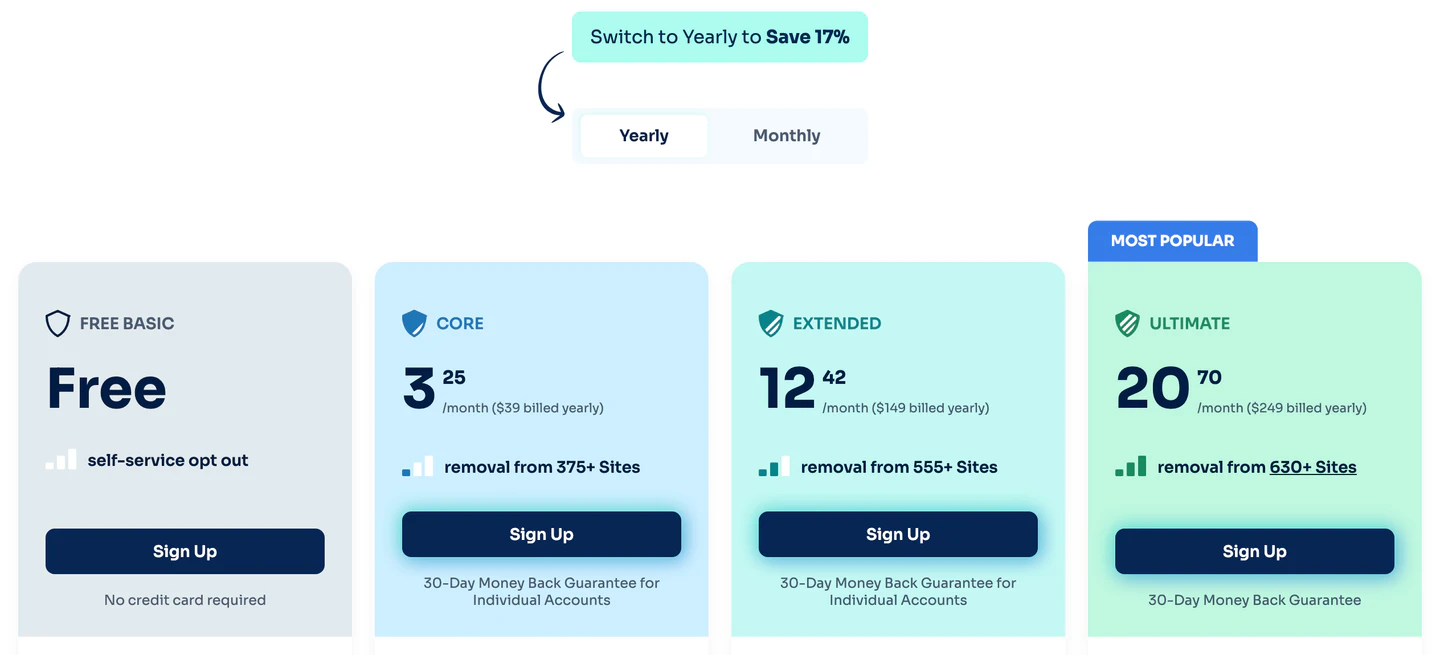
Optery is the easiest paid service to try without guessing. Its pricing page showed Free Basic with no credit card required, then Core at $3.99 per month monthly or $39 billed yearly, Extended at $14.99 monthly or $149 billed yearly, and Ultimate at $24.99 monthly or $249 billed yearly. The current U.S. page lists automated removal from 375+, 555+, and 630+ sites across those paid tiers; Ultimate separately lists custom requests across 945+ sites.
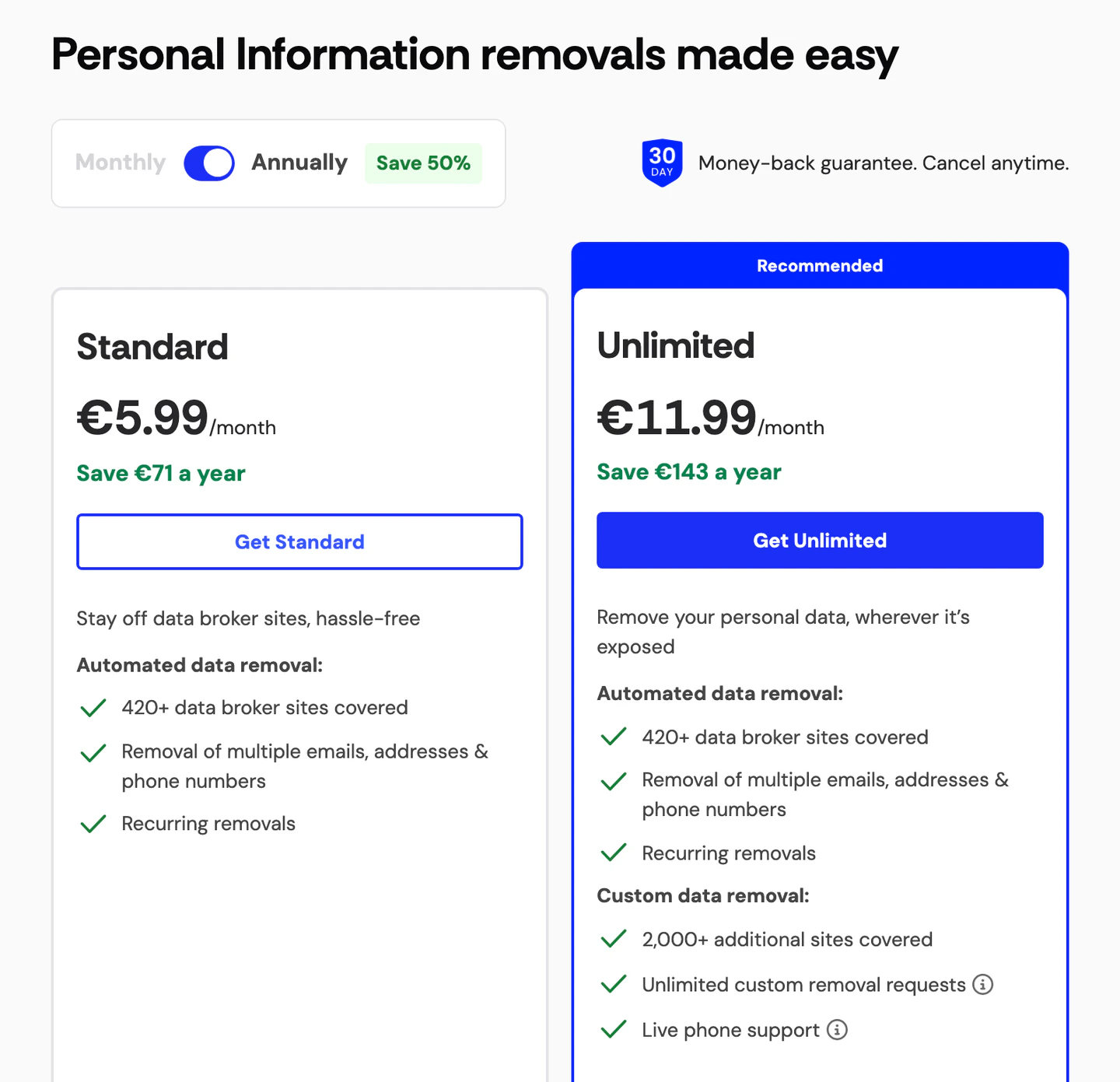
Incogni's official page text listed Standard at $7.99 per month billed $95.88 annually and Unlimited at $14.99 per month billed $179.88 annually. My rendered browser localized the visible screenshot to EUR, which is exactly why this guide treats prices as guide figures, not universal checkout totals.
DeleteMe's rendered U.S. pricing flow defaulted to a two-year single-person plan at $8.71 per month, billed $209 every two years. Its coverage page separately says DeleteMe removes private information from 976 data brokers and shows the page as updated on February 4, 2026. That is useful coverage evidence, but it is not a measured result for your own data.
1. California DROP: the free first step if you are eligible
DROP is the winner for eligible Californians because it changes the cost floor to zero. The official state page says it is safe, fast, free, and built to let residents tell data brokers to delete and not sell personal information. That makes it irresponsible to recommend a paid subscription first to a California resident who has not tried the official path.
Its limit is scope. DROP is not a dashboard for every public profile on the internet. It is not an identity-theft recovery service. It is not a VPN, a password manager, a dark-web cleanup tool, or a guarantee that every data broker is perfectly compliant on day one. It is an official request mechanism for registered brokers, with processing duties beginning August 1, 2026.
DROP is the right starting point because it is free, official, and built for a single deletion request to registered California data brokers.
Non-California residents, buyers who need exposure reports, and people who need broader recurring monitoring should treat DROP as insufficient on its own.
DROP ranks first for eligible California residents because cost clarity and official broker-processing obligations outweigh the narrower geographic eligibility and lack of exposure reporting.
- Free official state portal for eligible California residents
- Single request can cover over 600 registered data brokers
- Broker processing obligations start August 1, 2026
- Best first step before paying for a recurring subscription
- California residents only
- No measured removal outcome available from this evidence-led review
- No exposure scan or paid-service style report workflow
- Does not solve breach data, account security, credit recovery, or every non-registered data source
2. Optery: the best paid next check after DROP
Optery is the paid service I would check second because the free exposure report answers a different question than DROP. DROP asks registered data brokers to process a legal request. Optery helps you see what is visible and decide whether paying for removal makes sense.
That makes Optery especially useful for skeptical buyers. If your scan is clean or mostly irrelevant, you can avoid a paid subscription. If your scan shows real profiles, old cities, relatives, aliases, or search results you care about, the paid tiers are easier to justify.
The tradeoff is complexity. Optery gives more control, but the tier ladder requires more thinking than the default paid path. Core, Extended, and Ultimate change site coverage, human review, custom removals, and search-engine outdated-content help.
Optery gives the strongest proof-before-paying path because the free plan can surface exposure before a buyer commits to recurring removal.
Skip Optery if you want the simplest paid workflow and do not plan to inspect exposure reports or choose among coverage tiers.
Optery ranks second because its free scan and visibility are valuable after DROP, but the plan ladder is more complex than a simple recurring automation subscription.
- Free Basic plan with exposure reporting before payment
- Paid tiers publish clear coverage counts from 375+ to 630+ sites
- Useful after DROP to see whether paid cleanup still matters
- More reporting control than simpler paid services
- More plan complexity than Incogni
- Coverage and Expanded Reach details require careful reading
- Free scan is not the same as completed removal
- Evidence-led review only; no account, personal profile, removal outcome, support, cancellation, or refund workflow was tested
3. Incogni: the easier paid automation path
Incogni makes sense when you want the paid service to be boring. Its pitch is recurring removal from 420+ data broker sites, coverage for emails, addresses, and phone numbers, and re-removal when data comes back. That fits a buyer who has already taken the free official step and now wants ongoing cleanup without managing a detailed report habit.
The reason Incogni does not beat DROP is obvious: if the state can do the registered-broker request for free and you are eligible, pay only when the extra coverage or automation is worth it. The reason Incogni does not beat Optery for the next check is visibility. Optery's free scan is a better first paid-service diagnostic.
Incogni has a cleaner recurring automation story than most paid services, especially for buyers who do not want to manage a scan-first workflow.
Skip Incogni if you want a free exposure report before paying or if California DROP already solves the only broker-removal job you care about.
Incogni ranks third because its recurring automation remains useful, but it should follow the free official step and the scan-first diagnostic for many California readers.
- Clear recurring-removal pitch across 420+ data broker sites
- Standard annual pricing is easy to compare
- Good fit if you want a simple paid background workflow
- Unlimited tiers add custom-removal and broader website claims
- No free exposure scan like Optery
- Rendered pricing can localize by region and currency
- Paid automation should not replace the free California step for eligible residents
- Evidence-led review only; no paid dashboard or removal outcome was tested
4. DeleteMe: the premium U.S. coverage pick
DeleteMe still belongs in this decision, but it is no longer the default first move for a California resident. Its best case is premium U.S. coverage: a long operating history, public coverage page, custom-removal positioning, quarterly reports, and a two-year pricing flow that lowers the monthly equivalent if you commit upfront.
The risk is paying for brand comfort when the free state mechanism would have handled the first job. That does not make DeleteMe bad. It means the buyer has to be honest about why they are paying: broader public coverage, service posture, reports, custom requests, and convenience.
DeleteMe has the strongest premium U.S. positioning here, with a long-running service and a public 976-broker coverage page.
Skip DeleteMe if you have not tried California DROP, want a free exposure scan first, or do not want a two-year commitment in the rendered pricing flow.
DeleteMe ranks fourth for this specific California-first decision because its premium coverage case is real, but it is expensive relative to a free official first step.
- Public page says 976 data brokers covered
- Long-running U.S. service with premium positioning
- Rendered pricing flow showed quarterly reports and ongoing opt-outs included
- Better fit for buyers who value service posture over lowest cost
- Not the first move for eligible California residents who have not used DROP
- Rendered plan defaulted to two-year single-person billing
- Large broker list is not measured proof of removal for a specific user
- Evidence-led review only; no paid account, personal-data submission, support, cancellation, or refund workflow was tested
Who should still pay after using DROP?
Pay after DROP only when you can name the gap.
Pay if you are not a California resident. Pay if you want to see which profiles exist before you decide, which is where Optery is strongest. Pay if you want recurring removal reports and do not want to manage individual opt-outs. Pay if your household has multiple aliases, prior addresses, relatives, or high-risk exposure. Pay if you need custom removals from sites beyond registered California data brokers.
Do not pay just because the category is scary. Public broker listings are annoying and sometimes risky, but paid data removal is not the same as freezing credit, reporting identity theft, replacing passwords, or locking down two-factor authentication. If the risk has moved from "my address is online" to "someone opened an account as me," read the identity theft protection guide before buying another broker-removal subscription.
The strongest privacy stack is boring: submit the free official request if you are eligible, scan for what remains, use a password manager, turn on strong 2FA, freeze credit when appropriate, and pay for recurring broker removal only when the evidence justifies the renewal.
Bottom line
For eligible California residents, California DROP is the first move. It is free, official, and built for a single request to registered data brokers. Paid data-removal services now need to justify themselves as gap-fillers, not defaults.
Use Optery if you want to inspect exposure before paying. Use Incogni if you want the simpler paid automation path. Use DeleteMe if premium U.S. coverage and a large public broker list matter enough to justify the price.
The risk is overpaying after the free step. The wrong buyer for this page is someone outside California who expects DROP to work for them, or a California buyer who signs up for multiple paid accounts before checking whether a real exposure gap remains. The tradeoff is patience versus convenience: free official deletion first, paid help only when the remaining mess is specific enough to name.
California DROP vs paid data removal FAQ
California DROP is the right first move for eligible California residents. Paid services still matter when you need exposure visibility, non-California coverage, custom removals, household workflows, or recurring reporting.
Try freeReady to check California DROP?
Use the verified route if the trade-offs still fit. If not, jump back to the summary and compare the alternatives.
Security and privacy editor focused on evidence-led buying guides. Reads official documentation, audit notes, privacy policies, recovery limits, and support pages before turning security claims into practical recommendations.
Sarah starts by locating the evidence boundary, then ranks security and privacy tools by audit and policy scope, recovery design, trust boundaries, residual risk, and what a cautious buyer can verify.
Related Articles
Venice AI vs Proton Lumo vs Duck.ai: Which Private AI Chat Fits?
Private AI chat decision guide
Venice AI, Proton Lumo, and Duck.ai compared by privacy architecture, saved-history protection, provider exposure, plan limits, model access, and price.
Malwarebytes vs Bitdefender vs Norton
Paid antivirus decision guide
Malwarebytes, Bitdefender, Norton, and Microsoft Defender compared by paid antivirus value, real-time protection, renewal risk, bundle scope, and lab evidence.